
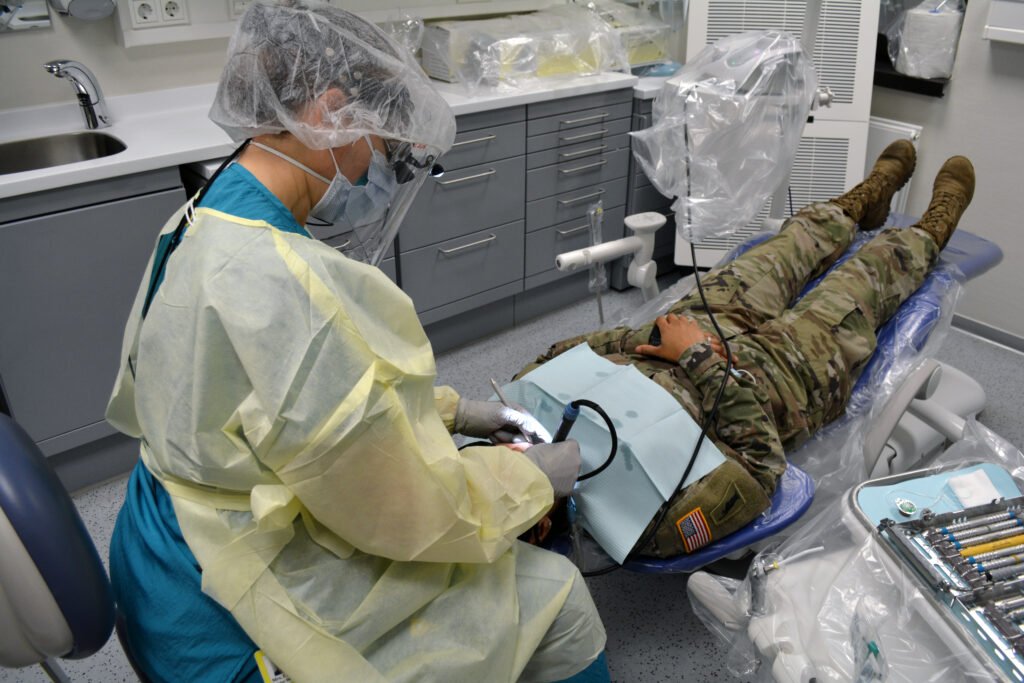
A dental checkup is an opportunity to examine teeth, gums and other tissues, identify concerns early and agree on a suitable prevention or treatment plan. It is different from a cleaning appointment, and neither a fixed recall interval nor a routine set of X-rays is appropriate for every adult. This guide explains what to expect, how risk influences the appointment and which symptoms should prompt earlier care.
A dental checkup typically includes a review of your health history and symptoms, examination of your teeth and gums, and assessment of other oral tissues. Imaging is selected when clinically necessary. Your dentist determines the next examination interval according to your individual needs and risk. Seek urgent dental care for concerning pain, swelling or injury rather than waiting for the next routine visit.
| Appointment Component | Purpose |
|---|---|
| Clinical Examination | Assess oral tissues and relevant findings |
| Imaging When Indicated | Answer a specific clinical question |
| Professional Cleaning Or Treatment | Address identified preventive or treatment needs |
| Risk-Based Recall | Plan follow-up according to individual circumstances |
Understand The Purpose Of A Dental Checkup
A dental checkup brings together information about the condition of the teeth, the supporting tissues and the person’s broader oral health. It is an opportunity to identify possible disease, review the effects of previous treatment and discuss ways to preserve function. Someone can have early dental decay or gum disease without experiencing substantial pain, so an appointment need not be reserved for the moment a tooth becomes uncomfortable.
The examination also gives a person an opportunity to raise questions about chewing, tooth sensitivity, dry mouth, bleeding gums and other changes. These issues can influence daily function even when they do not appear urgent. A useful conversation focuses on what the person is experiencing rather than relying solely on the appearance of the teeth.
A routine examination is not a guarantee that every possible problem will be identified. Some findings require imaging, a more detailed assessment or referral. The dentist decides which additional steps are appropriate according to the history and examination.
The NHS explanation of dental visits describes assessment of the mouth, teeth and other relevant areas. An effective visit should conclude with an explanation of the findings and the proposed next steps.
Our preventive health checklist discusses a related principle: appropriate prevention is based on actual risk and the purpose of the assessment. Dental care is part of health maintenance rather than simply a cosmetic service.
Prepare Your Medical And Dental History
Before the visit, think about the reason for arranging it and any changes since the previous examination. Note discomfort, bleeding, sensitivity, difficulty chewing, changes in the appearance of a tooth and any other relevant concerns. If a symptom is intermittent, describe when it occurs and whether particular foods or movements seem to trigger it.
Provide a complete list of medicines and supplements. Some products can affect saliva production, bleeding risk or the suitability of particular dental procedures. The dentist also needs to know about allergies, medical conditions, pregnancy and relevant previous treatment. Do not independently stop prescribed medicines before an appointment unless instructed by the appropriate clinician.
If you have previously received dental treatment elsewhere, consider whether records or existing images can be transferred. These may help the new dentist understand previous findings and avoid unnecessary repeat investigations. The practice can explain the process and any applicable consent requirements.
Our medical appointment guide explains how to organize health information clearly. For a dental visit, the information should be specific enough to support decisions without requiring you to determine your own diagnosis.
Tell the practice about accessibility needs or significant anxiety before the appointment where possible. A discussion about breaks, communication preferences and suitable arrangements can make the examination more manageable. The dentist should explain procedures and respond to questions, and you can ask for a pause if you need one.
What Happens During The Examination
A dentist may assess the teeth for decay, fractures, wear and the condition of existing restorations. They may examine the gum margins and supporting tissues, consider how the teeth meet and review other areas of the mouth. The details depend on the person’s circumstances and the purpose of the appointment.
Some findings can be assessed directly through visual examination and appropriate dental instruments. Other areas cannot be evaluated fully in that way. A dentist may therefore recommend additional investigation if it could provide information that changes care. The examination and any subsequent investigation serve complementary purposes.
Consider a fictional adult who attends a routine appointment without pain. The dentist identifies an area where an existing restoration may need further evaluation. Rather than automatically recommending a replacement, the dentist discusses the finding and the available ways to assess it. Another patient who attends because of acute swelling may need a different investigation and treatment priority.
Ask what any finding means. Terms such as decay, inflammation and wear describe different processes, and the appropriate next action may range from monitoring to treatment. A visual finding does not necessarily explain every symptom.
If a treatment is proposed, request an explanation of its purpose, reasonable alternatives, anticipated benefits, risks and costs where applicable. A patient should understand whether the proposal addresses an existing problem or aims to prevent one. A useful dental visit is not simply a list of procedures. It connects examination findings with decisions that make sense for the individual.
Understand Gum Health Assessment
Gum disease involves changes in the tissues supporting the teeth. Early inflammation may be associated with bleeding or swelling. More advanced disease can damage supporting structures and affect the stability of teeth. The absence of severe pain does not rule out a gum problem.
The dentist or other qualified dental professional may use a small measuring instrument to assess spaces around the teeth and observe relevant signs. The measurements are interpreted with the examination, history and any appropriate imaging. A home observation of bleeding gums cannot establish the extent of disease or the correct treatment.
The National Institute of Dental and Craniofacial Research gum disease resource describes symptoms, diagnosis and treatment options. It also explains why professional evaluation is relevant when gum problems are present.
A person who notices repeated bleeding while brushing should mention it rather than simply avoiding the affected area. Appropriate cleaning techniques may need adjustment, and professional treatment may be indicated. The right approach depends on the cause and findings.
Medical circumstances can affect oral health. Tell the dental team about relevant diagnoses and treatments, including diabetes where applicable. Our home blood pressure guide illustrates why medical measurements and history should be shared accurately with healthcare professionals. Do not interpret gum findings as proof of another medical condition.
The purpose of gum assessment is to preserve supporting tissues and function through appropriate prevention, monitoring or treatment. Ask which findings should be reviewed again and what changes are expected if a treatment is recommended.
When Dental X-Rays Are Useful
Dental imaging can help examine structures that are not fully visible during the clinical assessment. Depending on the question, imaging may provide information about areas between teeth, roots, supporting bone or other structures. Different imaging methods provide different information and involve different considerations.
In January 2026, the American Dental Association and American Academy of Oral and Maxillofacial Radiology published updated patient selection recommendations covering two-dimensional imaging and cone-beam computed tomography. The ADA radiography resource explains the importance of selecting imaging according to clinical necessity rather than using a universal schedule.
For example, a fictional adult with a recent appropriate set of images changes dental practices. The new dentist reviews the available information and determines whether further imaging is needed. A different patient with a specific new symptom may need an image to investigate that symptom. The fact that both people are attending a checkup does not mean they need the same imaging.
Ask which clinical question a proposed image is intended to answer. If a more extensive imaging method is suggested, ask why it is appropriate for the intended decision. Discuss previous images and any relevant medical circumstances with the dental team.
Do not assume that avoiding every X-ray is necessarily safer. An indicated image can provide important information for diagnosis and treatment. Equally, an image should not be ordered solely because a fixed time interval has passed without considering clinical need. The aim is to obtain useful information while avoiding unnecessary radiation exposure.
Understand The Difference Between An Examination And Cleaning
A dental examination involves evaluating oral health and identifying appropriate next steps. Professional cleaning is a procedure that addresses deposits and other aspects of oral hygiene according to the person’s needs. These services can occur during the same visit or separate visits, depending on the practice and clinical circumstances.
A routine cleaning and treatment for established gum disease are not necessarily the same procedure. More detailed periodontal treatment may involve additional assessment, specific instruments and follow-up. Ask the dental professional to explain which procedure has been recommended and why.
If a person has sensitivity, relevant medical conditions or concerns about a previous cleaning experience, they should discuss these before treatment begins. Do not attempt to remove hardened deposits using sharp household tools. Such attempts can damage tissues and do not replace appropriate professional care.
Between appointments, follow individualized oral hygiene advice. The CDC adult oral health guidance describes regular toothbrushing with fluoride toothpaste and cleaning between teeth. A dentist or hygienist can help identify suitable techniques or devices when ordinary flossing is difficult.
Our general health guide emphasizes the importance of practical health habits. Consistent daily care and professional assessment serve different purposes. One does not remove the need for the other.
If you receive a treatment plan, clarify whether it includes an examination, preventive cleaning, disease treatment or a separate review. Knowing the distinction helps you understand what has been performed, what remains outstanding and when another appointment may be appropriate.
How Often Should Adults Have A Checkup?
A fixed six-month interval is familiar, but the appropriate interval depends on a person’s risk and needs. The NHS dental checkup guidance explains that adults may be advised to return at different intervals, commonly between three months and two years depending on their circumstances. Local recommendations and professional advice may differ.
Relevant factors can include existing disease, previous dental problems, the condition of restorations, oral hygiene, dry mouth, medical circumstances and other risks. A person receiving active treatment may have appointments much sooner than a person receiving routine preventive examinations.
Imagine two fictional adults. One has stable findings and no recent disease progression, while the other has repeated decay and gum inflammation. A dentist may recommend different recall intervals because the likely benefit of reassessment differs. A longer interval for one person does not imply that dental care is unimportant, and a shorter interval for another does not necessarily mean treatment has failed.
Ask why the proposed interval is appropriate and what changes should lead to an earlier appointment. A planned recall is not an instruction to wait when a symptom develops. Contact the practice if there is persistent pain, bleeding, swelling or another concerning change.
Keep the agreed date or approximate period in a calendar. If access or cost makes the recommended follow-up difficult, discuss the problem with the dental practice. A useful plan should explain the priority of each appointment rather than leaving a patient to decide independently which parts of care can be postponed.
Recognize Symptoms That Need Earlier Dental Or Emergency Care
Toothache, a broken restoration, a mouth injury or swelling may require an appointment before the next routine examination. The urgency depends on the symptoms, the extent of injury and the person’s medical circumstances. Contact a dental professional for guidance rather than relying on repeated pain relief to postpone assessment.
The NHS toothache guidance describes when dental evaluation is needed. Severe swelling involving the mouth or neck that interferes with breathing, swallowing or speaking can represent an emergency. Seek immediate emergency care for these symptoms, significant uncontrolled bleeding, collapse or other severe findings.
A persistent unexplained mouth sore, lump, red or white patch or other concerning change also warrants assessment. The NIDCR oral cancer resource emphasizes evaluation of relevant symptoms that persist for more than two weeks. Do not wait two weeks when a symptom is severe or rapidly worsening.
Do not attempt to drain a suspected dental abscess, remove a painful tooth or apply corrosive substances to the gums. A suspected infection may require urgent treatment of its source. Leftover antibiotics are not a substitute for a dental assessment.
Our home first aid guide describes the distinction between basic preparedness and professional emergency care. The same distinction applies to dental problems. Household supplies cannot resolve every cause of dental pain or swelling.
If you contact a service, describe the duration of symptoms, location of pain, presence of swelling, injury and any difficulty breathing or swallowing. Provide relevant medical information. This helps the service determine the appropriate level of care.
Leave With A Clear Prevention And Treatment Plan
At the end of a checkup, ask the dental team to summarize the findings in ordinary language. Clarify whether any issue needs treatment now, whether another finding can be monitored and which preventive measures are most relevant. If there are several recommendations, ask about their relative priority and any alternatives.
A fictional patient is advised to return for treatment of one tooth and to review a separate area at a later examination. They record the two actions separately rather than assuming that every finding requires immediate treatment. They ask about the expected benefits, costs and what symptoms would justify contacting the practice sooner.
For home prevention, ask whether particular fluoride products, cleaning techniques or other measures are appropriate. Our calcium nutrition guide explains how dietary choices contribute to broader health, but no specific food or supplement replaces dental treatment when decay or other disease is present.
Keep any treatment plan, appointment details and relevant instructions. If moving to another practice, ask how records can be transferred. Accurate records can support continuity and reduce unnecessary repetition of assessments.
A dental checkup is most useful when the person understands the findings and the purpose of follow-up. Imaging, cleaning and treatment should each address a specific need. The goal is to maintain oral function, prevent avoidable disease where possible and obtain timely care when problems occur. Regular assessment should be adapted to individual risk, not reduced to a universal calendar rule.
Frequently Asked Questions
Does everyone need a checkup every six months?
Recall intervals should be based on individual risk and applicable professional guidance.
Do I need X-rays at every visit?
Imaging should be selected according to clinical need, previous information and the decision being investigated.
Is a cleaning the same as a checkup?
An examination assesses oral health; cleaning is a separate procedure that may be recommended according to need.
Can gum disease occur without pain?
It can. Bleeding, swelling or other changes should be discussed with a dental professional.
Should I stop medication before my visit?
Provide a complete medicine list and follow the appropriate clinician’s instructions.
What if I have swelling and trouble breathing?
Seek immediate emergency medical care.
Can I wait until my next checkup if a tooth hurts?
Contact a dentist about new or persistent symptoms rather than automatically waiting for the planned recall.
- NHS: What Happens At The Dentist
- NHS: Dental Checkups
- ADA: Dental Radiography
- NIDCR: Gum Disease
- NIDCR: Oral Cancer
- CDC: Oral Health Tips For Adults
- NHS: Toothache
Featured image: U.S. Army / Russell Toof, Dental Exam, U.S. public domain; resized for display.

General health education, not individual dental diagnosis or treatment.
Discover more from The Secret
Subscribe to get the latest posts sent to your email.