
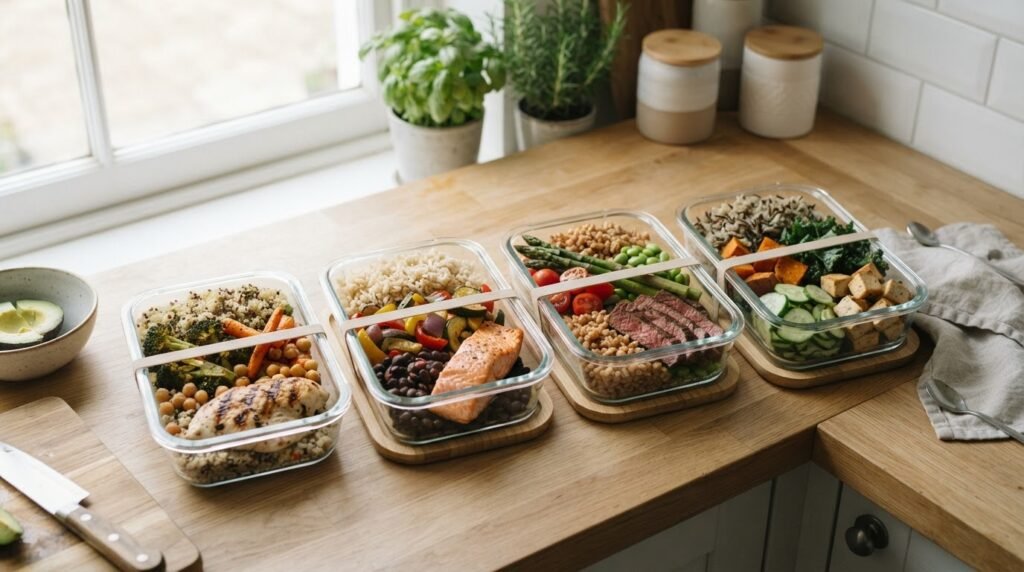
Healthy meal preparation is the practice of making some food decisions before a busy day starts. It can be as simple as washing vegetables, preparing a pot of beans or planning tomorrow’s lunch. It does not require seven identical containers, an expensive kitchen or a restrictive diet. The most effective routine combines suitable food choices, a realistic schedule and reliable food safety.
Start with two or three flexible meal components, prepare only what you can safely store, refrigerate perishable foods promptly and freeze portions intended for later in the week. Build meals around foods you enjoy, including vegetables, fruit, protein sources and grains or other starchy foods. Use a thermometer, not appearance alone, to check safe cooking and reheating.
Choose A Meal Prep Style That Fits Your Week
Many people abandon meal preparation because they begin with the most demanding version: cooking every breakfast, lunch and dinner on a single afternoon. Instead, decide which daily decision creates the most difficulty. A person who frequently skips lunch because work is unpredictable might prepare two lunches and keep a shelf-stable backup. Someone who enjoys cooking dinner but dislikes chopping vegetables could prepare ingredients rather than entire meals. Neither person needs to follow a comprehensive weekly menu.
There are three useful approaches. Batch cooking produces multiple portions of one dish. Component preparation creates separately stored ingredients that can be combined into different meals. A hybrid approach uses one cooked meal and several flexible ingredients. The hybrid can be particularly useful for households where people have different tastes or schedules. A portion of cooked lentils can accompany a grain bowl, become part of a soup or be combined with a freshly cooked vegetable dish.
Start by examining your calendar. Identify evenings when you can cook, workdays when you will need food away from home and occasions when you expect to eat elsewhere. Planning food for a day when you have already arranged a restaurant meal creates unnecessary waste. Planning a portable meal without access to refrigeration or a reliable insulated bag creates a safety problem.
Build Meals From Flexible Components
A useful meal is not defined by a precise arrangement of containers. Think instead about how the ingredients work together. A grain or starchy food supplies energy and a protein source supports maintenance of body tissues. Vegetables and fruit contribute a variety of nutrients and fiber. Unsaturated fats, herbs, spices and other flavorings can make a meal more satisfying. The exact balance depends on the person, the activity level, cultural preferences and medical needs.
For example, cooked brown rice or another grain, chickpeas, roasted vegetables and a dressing can become a warm lunch or a cold bowl when handled safely. A separate pot of soup might include potatoes, beans, vegetables and a protein source chosen by the household. People who eat meat or fish can use these foods alongside plant-based choices. Those who do not can combine beans, lentils, tofu, fortified foods and other suitable ingredients across the day.
Look at our guide to daily protein needs for the principles of choosing suitable protein portions, and our fiber guide for practical ways of increasing fiber gradually. A sudden change from very little fiber to large quantities of beans and raw vegetables can cause digestive discomfort for some people. Smaller portions and gradual changes may make a new routine easier to tolerate. People with dietary restrictions should use their clinician’s or dietitian’s advice rather than a generic meal formula.
Create A Shopping List From Actual Portions
Begin in the refrigerator and pantry instead of the grocery store. Note which ingredients are already available, whether they are still safe to use and what needs replenishing. A household with rice, canned beans and frozen vegetables may need only a few fresh foods to create several meals. An inventory reduces duplicate purchases and gives opened ingredients a specific place in the plan.
Decide how many portions you are genuinely preparing. Four work lunches do not require eight full dinners’ worth of food. If a recipe makes four portions and you need six, scale the recipe or add a second simpler dish. Consider whether each person wants the same portion size, and allow flexibility for appetite. Children, adults doing strenuous work and people with medical nutritional needs may require quite different portions.
For a fictional two-person household, three shared lunches could involve six portions of a grain, six portions of a chosen protein and enough vegetables for the desired meals. A bag of frozen vegetables could cover an unexpected extra lunch. Fresh ingredients likely to deteriorate first should be assigned to earlier meals. Shelf-stable and frozen ingredients provide alternatives when plans change. Keep the list grouped by store department so shopping takes less time.
Packaged ingredients vary substantially in sodium, added sugars and serving sizes. Our Nutrition Facts label guide explains how to compare two foods using the same amount rather than relying on advertising claims.
Set Up A Food Safe Preparation Station
A cooking session is easier when equipment is ready before raw food is handled. Clear the work surface, wash hands with soap and water and prepare clean utensils. Separate raw animal products from foods that are ready to eat. This is especially important during batch cooking because one contaminated utensil can touch several meals. Use separate cutting boards or wash and sanitize surfaces appropriately between tasks.
Wash fresh produce under running water before preparation when appropriate. Do not wash raw poultry; splashing can spread contamination around the sink and nearby surfaces. Thaw frozen foods safely in the refrigerator or another recognized safe method rather than leaving them on the counter all day. Arrange raw meat in a leak-resistant container so juices do not drip onto other food.
Use a food thermometer to confirm appropriate internal temperatures for the particular food. Different animal products have different recommended temperatures and some require rest times. The FoodSafety.gov cooking and handling guidance explains these distinctions. A browned exterior does not establish that food has reached the proper internal temperature, and a large batch may cook unevenly.
Keep a separate clean spoon for tasting. Wash hands after handling raw ingredients and before handling cooked meals or clean containers. If the kitchen is shared with children or pets, plan where hot pans, sharp tools and raw food will remain out of reach. The best routine is one that makes safe handling straightforward rather than dependent on memory alone.
Cool And Store Cooked Meals Safely
Food safety is a constraint on the whole weekly plan, not something to consider only when reheating. Under U.S. guidance, refrigerate perishable cooked foods within two hours, or within one hour when the surrounding temperature exceeds 90°F (32°C). Maintain the refrigerator at 40°F (4°C) or below. Divide large amounts into smaller, shallow containers so the food cools efficiently rather than leaving an entire deep pot on a worktop.
The USDA advises using most refrigerated leftovers within three to four days or freezing them. Some countries recommend shorter storage periods, and individual ingredients or product instructions may require a more conservative approach. A meal cooked on Sunday is therefore not automatically suitable for a Friday lunch merely because it is in a sealed container. Freeze later portions early instead of hoping that refrigeration will be sufficient for a full week.
Label the preparation date and contents. A label makes it easier to distinguish today’s rice from an older portion that looks identical. Keep raw ingredients separate from prepared meals in the refrigerator. If the appliance is crowded, arrange containers so cool air can circulate and use an appliance thermometer to verify its temperature.
Discard perishable foods when safe time or temperature limits have been exceeded. Smell, texture and appearance cannot reliably establish safety. Do not taste an uncertain leftover to test it. Read the USDA leftover guidance for the general storage rule and consult food-specific instructions as well.
Freeze Portions Before They Become Too Old
Freezing is a planning tool rather than a rescue method for questionable food. If you cook six servings but expect to eat only three during the refrigerator storage window, freeze the remaining servings promptly once they are ready for storage. Use freezer-safe containers and leave appropriate expansion space for liquids. Label each package with the dish, preparation date and any reheating instructions.
Different foods respond differently to freezing. A bean stew may retain a pleasant texture while a raw leafy salad may not. Some sauces separate when thawed. Rather than abandoning freezing because one dish changes texture, identify recipes and ingredients that your household enjoys after thawing. Store fresh garnish separately and add it on the day of serving.
Thaw frozen meals in the refrigerator when practical, or use an approved safe alternative such as a microwave followed immediately by heating. Follow packaging and equipment directions. When reheating cooked leftovers, U.S. guidance calls for an internal temperature of 165°F (74°C). Microwave heating can leave cold spots, so stir or rotate food as appropriate and check several locations with a thermometer. Do not repeatedly warm the entire week’s food to obtain a single serving.
If a freezer loses power, consult official food safety advice about the food’s temperature and ice crystals rather than assuming all food is safe because it was previously frozen. A small thermometer and an organized freezer inventory can make the decision easier.
A Sample Five Day Lunch Plan
The following example illustrates scheduling rather than prescribing a diet. On Sunday, prepare a cooked grain, a bean dish and roasted vegetables for early-week lunches. Freeze portions of the bean dish and grain intended for the later part of the week. Keep ready-to-eat produce in suitable containers according to its storage needs.
Monday could be a grain and bean bowl with roasted vegetables. Tuesday could combine the bean mixture with bread and a fresh side. Wednesday could be a smaller remaining portion alongside another freshly prepared food, provided all ingredients remain within their safe storage periods. Thursday could use a portion frozen on Sunday and safely thawed or reheated. Friday could be a fresh meal assembled from unopened shelf-stable or appropriately refrigerated ingredients, or another previously frozen portion.
For someone who cannot tolerate the same flavors several times, use different seasonings or toppings at assembly. Lemon, herbs, yogurt-based sauces or other preferred flavors can change the experience without demanding five separate cooking sessions. Keep ingredients requiring refrigeration cold and follow their own use-by instructions. A sauce containing perishable ingredients is not automatically safe for as long as a dry spice mixture.
If work changes unexpectedly, use the freezer portions later instead of forcing yourself to eat meals you no longer need. If you have food allergies, do not share preparation surfaces, utensils or sauces without appropriate precautions. When preparing for other household members, label allergens clearly and ask about dietary needs before making food on their behalf.
Pack Meals For Work And Travel
A meal that is safe when removed from the refrigerator can become unsafe during a long commute. Pack cold perishable food in an insulated bag with sufficient cold sources to maintain safe temperatures until it is refrigerated or eaten. At work, use a refrigerator if available. If you cannot reliably keep food cold or hot, select alternatives that do not require temperature control until opened and follow the manufacturer’s instructions.
Consider the physical requirements of the destination. A workplace with a microwave supports a different menu from a vehicle, a classroom or an outdoor work site. A soup may be inconvenient if there is no reliable way to heat it. A jar with a tight-fitting lid is not a substitute for safe temperatures. Check whether the containers are suitable for the microwave and whether they remain stable during transport.
Carry drinking water as appropriate for your activity and conditions. Our hydration guide explains why fluid requirements vary rather than assuming every person should drink the same fixed amount. Packing a drink separately from a meal can also reduce spills and make the bag easier to organize.
At the end of the day, wash food containers thoroughly and dry them before storing. Inspect seals and replace damaged containers. A reusable system only remains convenient if it is easy to clean. If you cannot establish that a leftover stayed within safe conditions, discard it instead of refrigerating it for another day.
Keep Costs And Cooking Time Under Control
Calculate the cost of a meal using the quantity actually used rather than the entire price of every package purchased. Suppose a bag of rice costs four dollars and you use one quarter of it for a batch. The rice contribution is one dollar. If beans, vegetables, oil and seasonings contribute another seven dollars in total, a four-portion batch costs approximately two dollars per portion before utilities and other costs. This example uses fictional prices; local prices and package sizes vary.
Add food waste to the calculation. A low price per kilogram is not economical if half the purchase spoils before use. Frozen vegetables, dried pulses and other long-lasting ingredients can help reduce this risk. Ready-prepared ingredients sometimes cost more, but they can still be worthwhile if they make home meals realistic and prevent more expensive last-minute purchases.
Measure the whole process rather than only cooking time. Shopping, washing, cooling, labeling and cleaning are part of meal preparation. If a routine takes three hours and saves only a few minutes on each of two days, a smaller batch may be more efficient. An initial trial of two meals offers more useful feedback than an elaborate kitchen makeover.
Review what was eaten, what remained and what required unexpected effort. Change one feature the following week. A practical routine evolves in response to real constraints, and a meal plan that includes convenience foods when useful is not a failure.
Adapt The Routine Without Restrictive Food Rules
Meal preparation should support access to food, not become a requirement to eat identical portions regardless of hunger or circumstances. A prepared lunch is a convenient option; it does not need to become the only permitted food. Adjust portions and include additional foods when appetite, activity or nutritional needs change.
People managing diabetes, kidney disease, swallowing difficulties, food allergies, pregnancy or other medical considerations may require specific advice about ingredients, portions or food safety. A registered dietitian or appropriate clinician can help adapt the plan. People recovering from an eating disorder should discuss whether structured food planning is helpful in their particular treatment context. Avoid using a rigid meal-prep calendar to compensate for eating or exercise.
A realistic plan leaves room for enjoyable meals, social occasions and unexpected schedule changes. The useful measure is whether you can access nourishing food safely and reliably. Start with a modest routine, observe what works and expand it only when it makes everyday life easier.
Frequently Asked Questions
Is meal prep safe for five days?
Not automatically. Most cooked leftovers under U.S. guidance should be used within three to four refrigerated days. Freeze later portions promptly and follow local and food-specific guidance.
Do I need special containers?
Use clean food-safe containers suitable for the intended temperature and heating method. Shallow containers help cool batches efficiently.
Can I prepare meals without counting calories?
Yes, a preparation routine can focus on convenience, variety, appetite and nutritional needs without tracking calories.
Is frozen produce suitable?
Frozen vegetables and fruit can be convenient, but check the packaging and cooking instructions. Keep them stored at the appropriate temperature.
How should I reheat a packed lunch?
For cooked leftovers, use suitable equipment and verify an internal temperature of 165°F (74°C) under U.S. guidance.
Can I tell whether leftovers are safe by smelling them?
No, harmful organisms may be present without noticeable changes. Use time and temperature guidance.
What if I only have an hour?
Prepare one meal component and one backup rather than a full weekly menu. Allow time for safe cooling and cleaning.
General education, not individualized medical or nutrition advice.
Discover more from The Secret
Subscribe to get the latest posts sent to your email.