
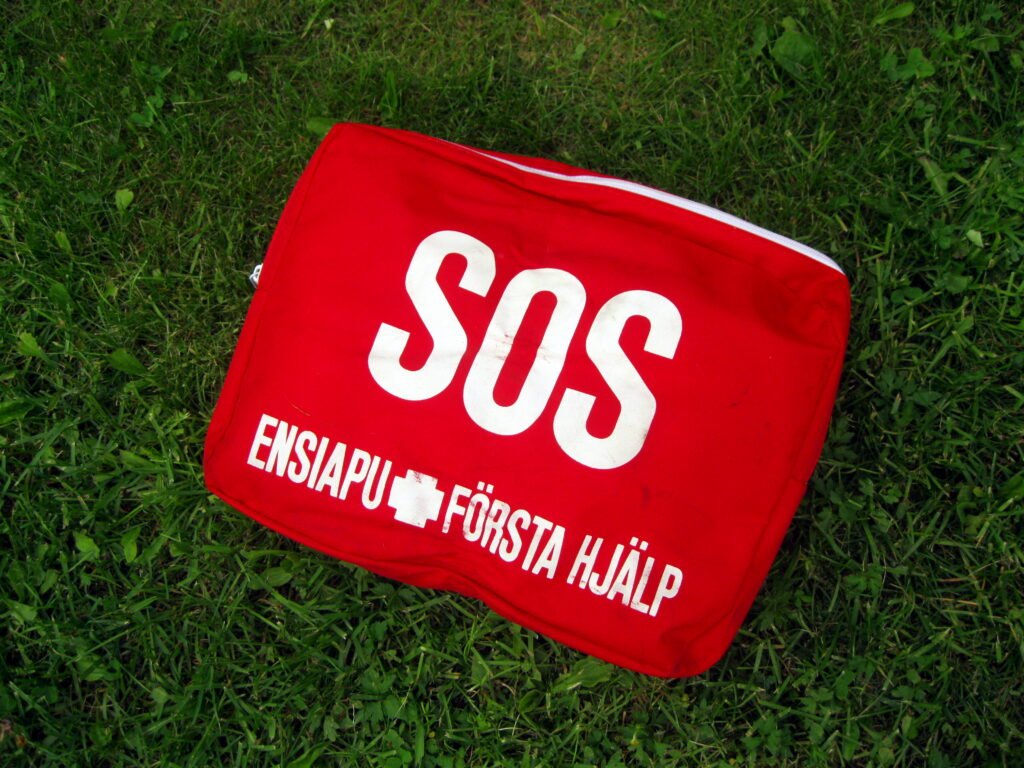
A home first aid kit helps make suitable supplies available when a minor injury or unexpected medical situation occurs. The useful kit is not necessarily the one with the greatest number of items. It is the one whose contents match the household’s needs, remain in usable condition and can be located quickly by an adult who understands how to respond. This guide explains how to assemble a practical kit, compare purchased and customized options and establish a simple maintenance routine.
Keep an accessible, clearly identified kit with suitable wound dressings, gauze, adhesive bandages, nonlatex disposable gloves, medical tape, scissors, a cold pack and basic first aid instructions. Adapt contents to household needs and store medicines securely according to their instructions. Check packaging, expiration dates and supplies regularly and after use. A kit supports first aid but does not replace emergency services or practical training.
| Supply Group | Example Contents | Check |
|---|---|---|
| Wound supplies | Gauze, adhesive bandages, non-adherent dressings, tape | Sizes, packaging, expiry |
| Protection | Nonlatex gloves | Fit and condition |
| Tools | Scissors, tweezers, appropriate cold pack | Intended use and condition |
| Instructions | First aid guide and emergency contacts | Current information |
Define What The Household Kit Is For
A first aid kit provides materials that can support an appropriate initial response before an injury receives further care if necessary. It may be useful for small cuts, scrapes and minor injuries, as well as providing supplies that can assist a trained person while professional help is being arranged. Its presence does not make the household capable of treating every emergency independently.
Begin with the people who live in or regularly visit the home. A household with children, a person who takes particular medication or someone with a known allergy may have needs that differ from those of a household containing only healthy adults. Discuss relevant individual emergency plans with healthcare professionals rather than designing a universal medicine selection.
Consider where ordinary injuries are likely to occur. Kitchen activities can involve hot surfaces and sharp utensils. Exercise areas may contain weights and other equipment. Gardening and household maintenance can involve small wounds, debris or other hazards. Identify the common activities without attempting to prepare for every imaginable situation through increasingly specialized equipment.
The American Red Cross first aid kit guide provides a useful starting point for general supplies. Its sample contents should be adapted to the location, number of users and actual circumstances.
Our burns and scalds guide explains why appropriate first actions may matter more than a particular packaged product. For a thermal burn, safe cooling and timely assessment remain important even when a kit contains several wound products.
Choose Dressings And Basic Wound Supplies
A practical kit contains dressings suitable for different small wounds and appropriate first aid situations. Individually packaged sterile gauze pads and non-adherent dressings can serve different purposes. Adhesive bandages in several useful sizes may be convenient for minor cuts and abrasions. Medical tape and roller bandages can help secure suitable dressings when used appropriately.
Select items based on their function rather than their number. A kit advertised as containing one hundred pieces might contain many copies of one small item but relatively few larger dressings. Review the actual inventory and determine whether the sizes and quantities meet the household’s needs.
Keep sterile supplies in their original sealed packaging until required. A dressing whose package is torn, wet or otherwise compromised should not be assumed to remain sterile. Store items where labels can be read without opening individual packages.
For a small ordinary wound, appropriate cleaning and covering may be useful. For serious bleeding, obtain emergency help and follow dispatcher instructions, including firm direct pressure where appropriate. A small adhesive bandage is not an adequate response to life-threatening bleeding. Practical first aid training can help you learn the appropriate actions for different circumstances.
Our hand hygiene guide discusses cleaning hands at relevant times. When providing care, use appropriate protective precautions if feasible without delaying urgent actions. A well-stocked kit makes useful materials easier to find, but it does not determine whether an injury can safely be managed at home.
Include Appropriate Protective Supplies And Tools
Disposable examination gloves can help reduce direct contact with blood or other bodily fluids. Choose suitable sizes for the people likely to provide assistance, and consider nonlatex options where relevant. Gloves are not a substitute for hand hygiene, and they do not provide protection against every hazard. Remove and dispose of used gloves appropriately.
A clean pair of first aid scissors may be useful for cutting dressing material. Tweezers may be suitable for limited tasks such as removing a superficial splinter when appropriate, but should not be used to probe a wound or remove an embedded object. Serious injuries require professional care.
An instant cold pack may be useful in some situations when used according to the product instructions with appropriate skin protection. Our sprain and strain first aid guide explains why cold and compression are not appropriate for every injury. Do not apply an instant cold pack directly to a thermal burn in place of appropriate running-water cooling.
Other useful items may include an emergency blanket, a small flashlight and concise first aid instructions from a recognized provider. Check that any items relying on batteries are functional and have suitable storage arrangements.
Avoid accumulating specialized devices that no household member understands how to use. Equipment for a particular emergency may be appropriate when a healthcare professional or recognized training program has recommended it. The ability to use the item correctly, its suitability and its accessibility are more important than its presence in an impressive inventory.
Keep Household Medicines Separate And Secure
Some commercially packaged kits contain over-the-counter medicines or topical products. These items require different considerations from sterile dressings or simple tools. Suitability can depend on age, allergies, medical conditions, other medications and the reason for use. A medicine appropriate for one household member may be unsuitable for another.
Do not assume that a medicine should be administered simply because it is included in a kit. Follow the instructions on the product and appropriate professional guidance. In an emergency, follow the advice of the emergency dispatcher or healthcare professional. Avoid giving medicines intended for a particular person to someone else without appropriate advice.
Keep medicines in clearly labeled original containers with relevant information. Store them according to the manufacturer’s instructions and securely out of children’s reach. Do not combine loose tablets in an unlabeled compartment, as this can make identification, dosing and expiration checking difficult.
A household member who has a prescribed emergency medicine may have an individualized action plan. Follow the agreed storage and access requirements for that product. The household’s ordinary first aid kit does not replace the person’s prescribed equipment, training or emergency instructions.
Our medical appointment guide explains the value of keeping an accurate medication list. A person with questions about appropriate products for the household can consult a pharmacist. The aim is to make necessary supplies available without introducing unnecessary medicines or unsafe storage arrangements.
Choose A Thermometer And Other Monitoring Equipment Wisely
A household thermometer may help document body temperature during illness. Choose a device intended for measuring human body temperature and suitable for the ages and measurement methods relevant to the household. Keep its instructions available and check that the battery or other required components remain functional.
Our thermometer selection guide discusses the differences between contact, ear and forehead measurements. Record the reading, unit and measurement site when relevant. A temperature alone cannot establish the cause or seriousness of an illness.
Other home medical devices may be appropriate when recommended for a particular purpose. For example, our pulse oximeter guide explains why a device’s intended use and measurement limitations matter. It is not necessary for every household to purchase an oxygen saturation monitor or an extensive collection of devices.
If a person has been instructed to monitor a measurement, retain the specific plan describing when to obtain readings and how to respond. Do not independently create an emergency threshold or rely on a normal-looking measurement to disregard serious symptoms.
Equipment requires practical maintenance. Check the manufacturer’s cleaning and storage guidance and the availability of replacement batteries or accessories. A device that cannot be operated reliably during an illness provides limited value. Prioritize the tools that address a genuine need rather than purchasing additional equipment solely because it is marketed as essential for every household.
Select A Storage Location And Organize For Quick Access
The main kit should have a known location that is accessible to the adults who may need it. A sturdy labeled container can help keep supplies together and protect them from ordinary damage. Depending on the contents, medicines and hazardous items may require separate secure storage to prevent accidental access by children.
Avoid placing the kit somewhere that is frequently exposed to moisture, excessive heat or conditions inconsistent with product instructions. Bathrooms and vehicles can present different storage challenges. A particular storage location should be chosen according to the actual supplies and the surrounding conditions.
Organize items into intuitive groups. For example, place commonly needed dressings together, keep protective supplies accessible and store instructions in a visible compartment. This reduces the need to search through unrelated items during a stressful situation. Do not remove sterile items from their packaging merely to make the kit look more organized.
Keep a simple inventory on the inside of the container or nearby. Note any separately stored emergency supplies and explain how to locate them without exposing personal medical information unnecessarily. Everyone who may provide assistance should understand which items are general household supplies and which are intended for a particular individual.
Consider accessibility when selecting the container. A person with limited hand dexterity may find some latches difficult to operate. A heavy kit stored at a high location may be impractical. Choose an arrangement that supports safe access while meeting applicable child-safety and medication requirements.
Compare A Ready-Made Kit With A Customized One
A ready-made first aid kit can provide a convenient starting arrangement. However, the contents may not match the household’s actual needs. Examine the item list, quantities, sizes and expiration information before purchasing. A large total piece count does not establish that the kit includes appropriate supplies.
A customized kit allows a household to choose individual items. This approach may be useful if some suitable supplies are already available or if particular sizes and storage arrangements are necessary. The purchaser must still check the quality, packaging and intended use of the components.
Consider a fictional comparison. A ready-made kit costs thirty-five dollars and includes useful basic dressings but lacks particular glove sizes needed by the household. A customized arrangement costs forty dollars, including a suitable container and the required sizes. The fictional prices are examples of a decision process, not actual shopping recommendations or market estimates.
Compare the cost after accounting for items that must be added or replaced. A lower initial price may offer little value if the majority of its components are unsuitable. Conversely, there is no reason to purchase an expensive professional kit when a simpler arrangement meets the actual purpose and the household’s training.
Check whether individual replacement supplies are available. A kit that can be replenished after use may be more practical than one that must be replaced as a complete set whenever a few items are used. Choose a product on its functional inventory and documentation rather than relying exclusively on the packaging or brand name.
Inspect Expiration Dates Packaging And Condition
The expiration date of one item does not automatically establish the expiration date of every item in the kit. Inspect individual components, including medicines, sterile supplies and products that contain adhesives or other materials that may deteriorate. Follow the manufacturer’s expiry and storage information.
The Red Cross kit maintenance guidance recommends reviewing supplies annually and replacing expired or damaged components. It is also useful to check the kit after it has been used or exposed to unsuitable storage conditions. Some households may choose more frequent checks based on use and circumstances.
Inspect the container itself. Make sure it closes properly and that the contents have not become wet, damaged or contaminated. A product may become unsuitable before its printed expiration date if the packaging is compromised or the material has deteriorated.
For a simple maintenance record, note the inspection date, items requiring replacement, the nearest upcoming expiration and the person responsible for obtaining supplies. Do not mark an item as replaced until it is actually available and appropriately stored. This approach is more reliable than an undocumented intention to purchase replacements later.
Dispose of expired medicines and other products according to applicable local guidance. Do not give them to another person or retain them as a substitute for an appropriate supply. A usable kit depends on its current contents, not merely on the date it was originally purchased.
Prepare Emergency Contacts And Learn Practical First Aid
Keep relevant emergency contact information available. Emergency telephone numbers differ by location, so verify the appropriate numbers for your area. Consider contact details for relevant healthcare services and poison-control advice where available. Household members should know how to describe their location and communicate the nature of an emergency.
Recognized first aid training can help people practice actions such as responding to unresponsiveness, obtaining help and managing serious bleeding. A kit checklist cannot teach the physical skills needed for every situation. Seek an appropriate course and refresh skills according to the training provider’s recommendations.
Our vaccination review guide explains why accurate medical records can support preventive and injury-related care. A household with specific medical concerns may also benefit from an individualized written action plan agreed with the relevant healthcare professional.
In a serious emergency, call for help promptly. Do not search through a kit for an unfamiliar product while delaying emergency assistance. Severe breathing difficulty, unresponsiveness, major bleeding and other serious symptoms require urgent emergency response. Follow dispatcher instructions.
A useful household preparation exercise is to confirm that an adult can locate the kit, open it safely and identify the main supplies without damaging their packaging. Review the storage arrangement whenever household circumstances change. The goal is readiness rather than a guarantee that every injury can be managed without professional care. A practical kit, reliable access to assistance and appropriate training work together.
For examples of using a kit within a broader safety plan, review our nosebleed first aid guide, preventive health checklist and general health guide. These resources address different aspects of preparation, prevention and appropriate care.
Frequently Asked Questions
What should a basic first aid kit contain?
Suitable dressings, gauze, adhesive bandages, gloves, tape, scissors and other basic supplies chosen for the household.
Is a larger kit always better?
Compare the actual types and sizes of supplies. A large piece count does not guarantee suitability.
How often should I check the kit?
Review at least annually and after use, replacing expired or damaged supplies.
Should medicines be stored loose in the kit?
Keep medicines securely stored in original labeled containers according to their instructions.
Do all households need a pulse oximeter?
Medical devices should address a genuine monitoring need. Discuss suitability with a healthcare professional when appropriate.
Can a kit replace first aid training?
A kit supplies materials but cannot teach practical emergency response skills.
What if there is serious bleeding?
Call emergency services and follow dispatcher instructions, including appropriate direct pressure where relevant.
- American Red Cross: Make A First Aid Kit
- American Red Cross: First Aid Kit Expiration And Maintenance
Featured image: Santeri Viinamäki, First Aid Kit, CC BY-SA 4.0; resized or cropped for display under the same license.

General first aid education; follow emergency instructions and seek recognized training. No specific kits were independently tested.
Discover more from The Secret
Subscribe to get the latest posts sent to your email.