
Thyroid test reports often combine several hormones and may include thyroid antibodies. Their meaning depends on the relationships between the measurements, the purpose of testing and the circumstances of the patient. This guide explains the main tests, common interpretation patterns, preparation considerations and the questions to ask after an unexpected result.
TSH is a pituitary hormone that helps regulate thyroid hormone production. Free T4 measures circulating thyroxine that is not bound to carrier proteins. T3 and antibody tests can provide additional information in selected circumstances. A high or low TSH is not a complete diagnosis. Review the actual laboratory reference intervals, medications, symptoms and accompanying hormone values with a healthcare professional.
| Measurement | Purpose |
|---|---|
| TSH | Pituitary signaling |
| Free T4 | Unbound thyroxine |
| T3 | Additional hormone assessment in selected circumstances |
| Thyroid Antibodies | Investigation of potential autoimmune causes |
How The Thyroid And Pituitary Work Together
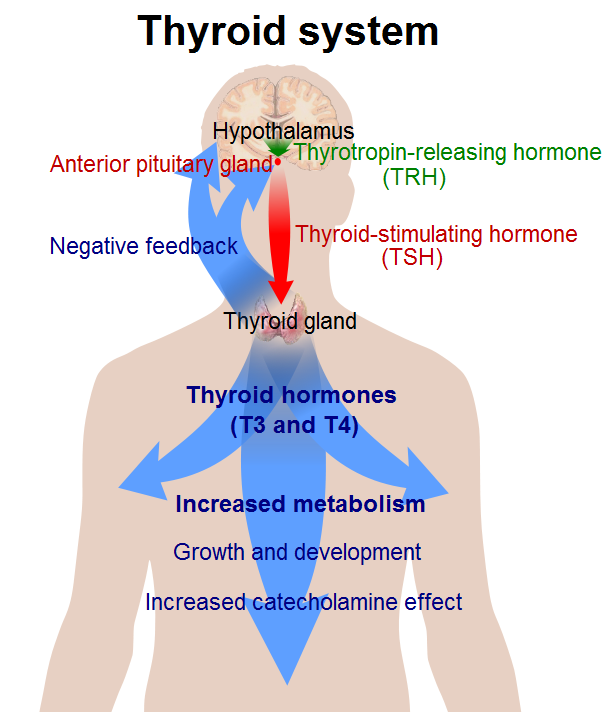
The thyroid is a gland in the front of the neck that produces hormones involved in regulating metabolism and other body functions. The pituitary gland produces thyroid-stimulating hormone, usually abbreviated TSH, which signals the thyroid to produce and release hormones. The hypothalamus also participates in controlling this system. A feedback relationship helps maintain appropriate hormone levels.
Imagine a simplified feedback system: when circulating thyroid hormone decreases, the pituitary may respond by increasing the signal to the thyroid. When hormone levels rise, the signal may decrease. This relationship explains why a high TSH can accompany an underactive thyroid and a low TSH can accompany an overactive one. The simplified explanation assumes that the feedback system functions normally. Pituitary disease, medication effects and other circumstances can change the pattern.
Symptoms associated with thyroid disorders may involve energy, bowel habits, temperature tolerance, weight, heart rate and other functions. However, none of these symptoms is exclusive to thyroid disease. A person experiencing fatigue should not conclude that the thyroid is responsible without assessment.
Our medical checkup guide explains how to present symptoms and medical history during an appointment. Thyroid testing is useful when it answers a clinical question, not because every nonspecific symptom can be assigned to a hormone disorder.
What The TSH Measurement Tells You
TSH is frequently selected as an initial test because changes in thyroid hormone production can lead to changes in pituitary signaling. The measurement is commonly reported in milli-international units per liter, although laboratories may use equivalent notation. Retain the reported unit and reference interval.
When TSH is elevated, a clinician considers whether the thyroid is producing enough hormone and whether additional testing is needed. When TSH is reduced, the clinician considers possible excess thyroid hormone production, medication effects and other causes. Neither finding independently establishes the cause or dictates a treatment.
For example, two hypothetical patients have TSH values above their respective laboratory intervals. One also has a low free T4 result, whereas the other has a free T4 result within the relevant interval. These are different biochemical patterns that may lead to different clinical decisions. The same flag on the TSH line is not sufficient to interpret both cases in the same way.
The MedlinePlus TSH test guide describes why follow-up thyroid measurements are often needed when an initial result is abnormal. Ask whether the clinician is investigating new symptoms, monitoring an existing diagnosis or following up a previous result.
Do not use the TSH value alone to change thyroid replacement medication or decide whether treatment is necessary. Interpretation requires the complete circumstances, including the reason the test was ordered.
Understand Total T4 And Free T4
Thyroxine, known as T4, is a major hormone secreted by the thyroid. Much of the circulating hormone is bound to proteins. A smaller unbound portion is measured as free T4, often abbreviated FT4. A total T4 measurement includes both bound and unbound hormone.
This distinction matters when the amount of binding protein changes. A total hormone concentration can change because the amount of carrier protein has changed, without an equivalent change in free hormone. Pregnancy and some medicines can affect binding proteins. The appropriate test and interpretation depend on the clinical context.
A fictional laboratory report lists total T4 in one unit and free T4 in another. Comparing the numerical values directly would not establish which measurement is higher or lower in any meaningful sense. Each result must be compared with its own reference interval. The two assays measure different quantities.
The MedlinePlus thyroxine guide provides further information about total and free measurements. In many routine assessments, free T4 alongside TSH can help clarify the thyroid function pattern.
Some laboratory methods also have limitations when particular medical circumstances or interfering substances are present. If a result appears inconsistent with other information, a clinician may investigate whether the measurement accurately reflects the person’s condition.
Our cholesterol results guide describes a related principle: measurements within a panel have distinct roles and should not be interpreted as interchangeable numbers.
When T3 And Antibody Tests Add Information
Triiodothyronine, called T3, is another thyroid hormone. Some T3 is produced directly by the thyroid, while much is produced through conversion of T4 in other tissues. Clinicians may consider a T3 measurement when investigating particular patterns of thyroid hormone excess. It is not automatically necessary to request every available hormone test whenever thyroid function is assessed.
Thyroid antibody tests address a different question. Certain antibodies can provide evidence relevant to autoimmune thyroid conditions. Thyroid peroxidase antibodies, for instance, may support investigation of autoimmune thyroid disease, while TSH receptor antibody tests can be useful in selected investigations of thyroid hormone excess.
An antibody result does not directly measure how much thyroid hormone is available. A person can have an antibody result that requires clinical interpretation even when current thyroid function measurements appear within their relevant intervals. Likewise, a thyroid hormone abnormality does not establish which antibody result will be present.
Imagine a person who has an abnormal TSH result and asks for a large panel of antibody tests because more information seems preferable. The clinician first considers what underlying condition is plausible and which measurement would help determine the next step. A test that does not change the investigation or management may add cost and confusion without providing a useful decision.
The American Thyroid Association thyroid function resource explains the distinct roles of hormone measurements and antibody investigations. Use the information to understand the question each test addresses, rather than treating a longer laboratory report as inherently more comprehensive care.
Recognize Common Patterns Without Self-Diagnosing
In typical primary hypothyroidism, a raised TSH and reduced free T4 can occur because the pituitary is signaling a thyroid that is not producing enough hormone. In typical primary hyperthyroidism, a suppressed TSH can accompany elevated free T4 or T3. These are useful introductory patterns, but they do not describe every possible presentation.
A raised TSH with free T4 within the relevant interval may be described as a subclinical hypothyroid pattern after appropriate assessment. A low TSH with thyroid hormones within their intervals may correspond to a subclinical hyperthyroid pattern. The terminology describes biochemical findings, not a universal indication for treatment. Persistence, degree of abnormality, age, symptoms, pregnancy and other factors influence decisions.
A low or inappropriately normal TSH with low free T4 may raise different questions, including whether pituitary or hypothalamic function is relevant. Acute illness and measurement interference can also affect patterns. This is why a simplified table should never be used as a standalone diagnosis.
Consider a fictional person whose result is marginally outside a reference interval during a significant illness. A clinician may decide that reassessment after recovery is appropriate, depending on the complete circumstances. Another person with more substantial abnormalities or concerning symptoms may need immediate investigation. A routine repeat-testing approach does not fit every situation.
Our blood pressure measurement guide emphasizes interpreting observations with their context. The same approach applies to thyroid results: retain the actual report and ask what the combined findings mean.
Prepare For Testing And Mention Biotin
Follow the preparation instructions from the laboratory or healthcare professional. Thyroid blood tests themselves do not always require fasting, but other tests ordered at the same appointment may have different requirements. Ask how prescribed thyroid medication should be timed relative to testing if the instructions are unclear.
Provide a complete list of medications and supplements. Biotin, sometimes included in products marketed for hair and nails, can interfere with particular laboratory assays and create results that appear abnormal even when the actual hormone concentrations are different. The direction and importance of interference depend on the laboratory method.
The ATA resource on biotin interference discusses this problem. Tell the healthcare team the product name, amount and timing of your most recent use. Follow their instructions about whether and for how long a supplement should be withheld. Do not independently stop prescribed medicines or a medically necessary supplement.
If you have recently been seriously ill, are pregnant, have had thyroid surgery or have another relevant condition, explain this before the test is interpreted. A laboratory cannot necessarily infer all relevant clinical circumstances from a blood sample.
Our vitamin D guide describes how supplement units and product combinations can be confusing. Preserving the actual label or a photograph of it can help the clinician identify ingredients accurately. A useful test preparation plan supports reliable interpretation without encouraging unapproved medication changes.
Compare Reference Intervals And Results Over Time
Reference intervals are established using particular methods and comparison populations. They can vary between laboratories and may differ for children, pregnancy or other clinical circumstances. Do not substitute a range taken from an unrelated website for the interval accompanying your result.
Treatment targets can also differ from general reference intervals. Someone receiving thyroid hormone replacement, someone being investigated for a new condition and someone receiving specialized follow-up after thyroid cancer may have different objectives. A result that is appropriate for one patient is not necessarily the target for another.
When comparing a series of reports, record the collection date, laboratory, TSH, free T4 and any other relevant measurements with their units. Note the timing of treatment changes and major illnesses. Do not silently combine total T4 and free T4 into the same record column.
A hypothetical person receives a new test result soon after a medication change and expects the result to reflect the final stable effect immediately. Hormone regulation and the timing of laboratory follow-up can be more complicated. Ask the clinician when it is appropriate to assess the response. Repeating tests more frequently than recommended may not improve the decision.
Our preventive screening guide explains why the timing of testing should be connected to its purpose. If you receive a critical result or have concerning symptoms, however, do not wait for a previously scheduled routine appointment. Follow the instructions provided by the healthcare service.
Recognize Symptoms That Need Assessment
Thyroid disorders may be associated with tiredness, changes in bowel habits, temperature intolerance, palpitations, weight changes and other symptoms. These findings can have numerous explanations. It is inappropriate to assign a diagnosis by counting symptoms or to start thyroid products because a list seems familiar.
If symptoms are persistent or interfere with ordinary activities, arrange medical assessment. Tell the healthcare professional when the symptoms began, whether there were associated medication or health changes and whether they are improving or worsening. Provide prior thyroid results when available.
Severe chest pain, fainting, serious breathing difficulty, marked confusion or other emergency symptoms require immediate medical care. Some serious thyroid-related conditions can also involve substantial changes in heart rate, temperature or mental state, but diagnosing the cause is not a task for home testing.
A person with neck swelling, difficulty swallowing or persistent voice changes may need assessment of the thyroid or other structures. A hormone result alone cannot determine whether a structural abnormality is present. The clinician may decide whether examination or imaging is appropriate.
Our fitness tracker guide explains the limitations of consumer heart rate and activity data. A wearable trend can provide context when discussing symptoms, but it cannot establish a thyroid diagnosis. Avoid increasing exercise intensity in an attempt to test whether unexplained symptoms are caused by a hormone condition.
The appropriate next step is based on the actual medical circumstances. A normal test does not automatically mean persistent symptoms should be ignored, and an abnormal test does not justify self-treatment.
Prepare A Useful Thyroid Follow-Up Conversation
Start with the reason for testing. Ask whether the findings suggest a need for further hormone measurements, an investigation of the cause or a review of treatment. If the clinician recommends another test, ask which question it is intended to answer and when it should be performed.
Bring the full report rather than a cropped image showing only the flagged result. Keep the reference intervals and units visible. Also bring a list of medicines, vitamins and other supplements. If you are already receiving thyroid treatment, record the product, schedule and any recent changes accurately.
Discuss practical difficulties. A person who struggles to obtain medication consistently or follow its instructions should explain the problem rather than adjusting the schedule without advice. If a proposed follow-up appointment or test is inaccessible, ask the healthcare service about appropriate alternatives.
Our general health guide describes health as involving multiple dimensions and practical preventive choices. Thyroid measurements can inform particular medical decisions, but they should not be used as a broad score of overall health.
A useful record might include the date, TSH, free T4, units, accompanying tests and the clinician’s agreed next action. It does not need to assign its own disease stage or prescribe a supplement. Understanding the interaction between the thyroid and pituitary helps make the conversation clearer. The priority is appropriate evaluation, reliable monitoring when indicated and a treatment plan suited to the individual.
Frequently Asked Questions
Does high TSH always mean hypothyroidism?
It can suggest reduced thyroid function, but free T4 and clinical context matter.
What is the difference between total and free T4?
Total includes protein-bound and unbound hormone; free T4 measures the unbound fraction.
Does everyone need a T3 test?
Additional tests depend on the clinical question.
Can biotin affect results?
It can interfere with certain assays. Tell the clinician and laboratory about its use.
Do thyroid tests require fasting?
Follow the preparation instructions for every test ordered.
Can I change my thyroid medicine based on TSH?
Discuss the result and any adjustment with your prescribing clinician.
Can a normal TSH exclude every thyroid disorder?
Not in every clinical circumstance. Other findings and tests may be relevant.
- MedlinePlus: TSH Test
- MedlinePlus: Thyroxine Test
- American Thyroid Association: Thyroid Function Tests
- American Thyroid Association: Biotin Interference
Featured image: Mikael Häggström, Thyroid System, CC0 1.0; resized for display.

General health education, not individualized diagnosis or treatment.
Discover more from The Secret
Subscribe to get the latest posts sent to your email.