
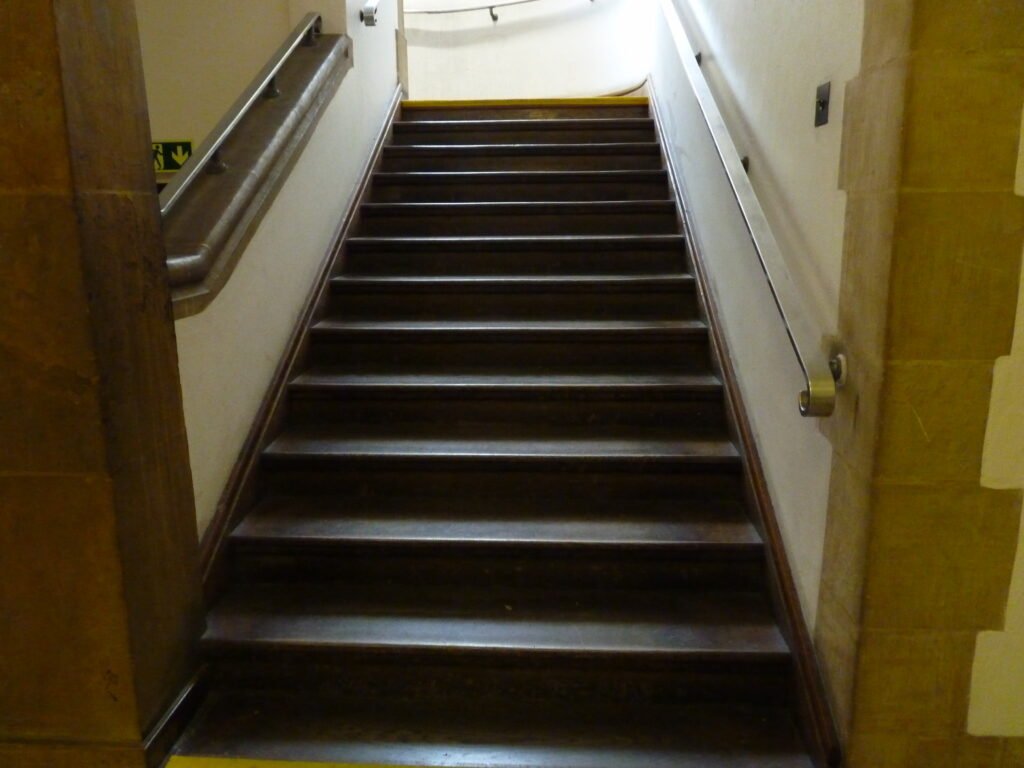
A staircase can provide a convenient opportunity for physical activity without a gym membership or specialized equipment. Climbing stairs, however, can demand considerably more effort than walking on level ground. A useful stair-climbing routine must account for current fitness, balance, the staircase itself and the ability to recover. This guide explains how to start at a manageable level, recognize relative intensity and make sensible progress without turning every staircase into a workout.
If stairs are safe and suitable for you, start with a short, familiar staircase with a secure handrail and comfortable pace. Allow recovery, avoid rushing and use the lift or another route when needed. Stair climbing may contribute to aerobic and muscular activity, depending on your effort. Stop for concerning symptoms and seek individualized advice if you have relevant mobility, balance or medical limitations.
Understand Why Stairs Feel Different From Level Walking
Ascending stairs requires a person to raise their body repeatedly against gravity. The legs contribute to moving the body upward, while coordination and balance help maintain a controlled path from one step to the next. Compared with level walking at a comfortable pace, climbing a flight of stairs can create a substantial increase in breathing and muscular effort.
The amount of effort depends on several factors: the height of the steps, the number of consecutive steps, the pace, the person’s body proportions and their current abilities. Carrying a load can add another demand. A flight in a familiar building is not necessarily equivalent to a flight in another building, so counting flights alone does not describe the entire workload.
The NHS adult activity guidance includes stair walking among examples of activity. Its suitability and intensity depend on the individual. Someone who finds stairs demanding may need a different starting point from a person who uses them comfortably every day.
Our walking for fitness guide describes how to establish a manageable walking routine. Level walking can be a useful alternative or preparation for a person who is not ready for repeated stair climbing. There is no requirement to make stairs the primary form of exercise when another activity is more appropriate.
Check Whether Stair Climbing Is Suitable
Before creating a training routine, distinguish ordinary staircase access from deliberately increasing the number of climbs. Someone who already manages necessary stairs may not automatically be ready for repeated flights. Consider how comfortable the ordinary task feels, whether a handrail is needed and whether fatigue affects the ability to descend safely afterward.
A person who has recurrent falls, significant balance difficulties, unexplained breathlessness, recent surgery or an injury may need individualized guidance before introducing stair exercise. Medical conditions and medication can also affect tolerance. Follow any existing activity restrictions and ask an appropriate healthcare professional if you are uncertain about participation.
Choose a different activity if the available staircase is unsuitable. A level route, an appropriately adjusted exercise bike or an adapted exercise session may address the same general goal with different movement demands. Our stationary exercise bike comparison explains why equipment fit and accessibility matter.
Do not use repeated stair climbing as an unsupervised test to determine whether your heart or lungs are healthy. Chest pain, fainting, severe breathing difficulty or other emergency symptoms require prompt medical assistance. Recurrent dizziness, unexpected exercise intolerance or persistent pain warrants appropriate assessment.
An individual who uses a mobility aid should follow the advice given for stair access and transfers. A generic demonstration of an unsupported exercise cannot establish a safe technique for someone with significant mobility limitations. The first decision is whether the activity is appropriate, not how many repetitions to complete.
Choose A Staircase That Supports Safe Movement
A suitable staircase has predictable steps, adequate lighting, a stable surface and a secure handrail where needed. Check whether steps are wet, damaged or obstructed. Avoid using an unfamiliar staircase with poor visibility or irregular step heights for repeated fitness practice. A public staircase may also be unsuitable if exercising there obstructs other people.
Use footwear appropriate for the surface. Shoes should fit securely and provide a predictable contact with the steps. Avoid loose footwear or clothing that could catch underfoot. Our walking shoe guide explains how fit and practical use influence footwear selection.
Plan how to descend or leave the staircase before starting the climb. Someone who reaches the top while excessively fatigued may have more difficulty maintaining control during descent. If a lift is available and appropriate, using it for the return journey can be a practical option. It is not a failure to use an accessible alternative.
Avoid looking at a phone or adjusting a timer while moving on the stairs. If tracking a session, prepare the record beforehand and review it from a safe stopping place. Keep at least one hand available for the handrail as needed and avoid carrying unnecessary objects during practice.
A safe exercise setting matters more than the number of floors available. If there is no suitable staircase in your home or neighborhood, do not attempt to create one using unstable furniture or stacked household objects. Choose a different activity or suitable equipment instead.
Use Relative Effort Instead Of Racing The Clock
The intensity of stair climbing depends on the person performing it. A pace that is manageable for an experienced exerciser may be vigorous for a beginner. The CDC physical activity intensity guide describes the talk test as one way to estimate relative aerobic effort. At moderate intensity, conversation generally remains possible even if singing is difficult. Vigorous effort makes speaking more than a few words difficult without pausing.
Use the talk test only as a general educational tool. It does not replace clinical instructions or establish that an activity is safe. A respiratory condition, medication or another factor can affect the way effort is experienced. If a healthcare professional has prescribed a particular exercise range, follow that guidance.
For an otherwise healthy beginner, a controlled ascent that does not cause overwhelming breathlessness is more useful than attempting to achieve the fastest possible time. Stop at an appropriate landing if a rest is needed. Avoid sudden changes in speed or skipping steps simply to increase the challenge.
Our cardio intensity guide discusses the limitations of predicted heart rate zones. A wearable can provide information about a session, but it may not capture brief changes accurately. Do not chase a target heart rate while navigating a staircase.
A session can be productive without becoming vigorous. If a single short flight already creates a demanding effort, choose level walking or another suitable activity as your primary endurance exercise and introduce stairs only when appropriate.
An Illustrative Four-Stage Progression
The following framework is an original example for an otherwise healthy adult who already climbs stairs comfortably and has no relevant exercise restrictions. Each stage can be repeated for as long as needed. It is not a clinical program or a promise that every person can progress at the same rate.
During the first stage, choose one short familiar flight. Walk up at a comfortable controlled pace, use the handrail as needed and rest in a safe place. Decide whether one ascent is sufficient for the session. If the descent is not comfortable, use a suitable alternative route.
During the second stage, someone who has tolerated the first stage may repeat the same short ascent on another day or add a second ascent after adequate recovery. Maintain a similar pace and do not simultaneously choose higher steps or carry weights.
During the third stage, a person who consistently manages the previous workload may modestly increase either the number of steps or the number of ascents. Keep the rest periods flexible. If the person begins to hurry, loses control or struggles with the descent, reduce the demand.
The fourth stage focuses on establishing a repeatable routine that fits the rest of the week. There is no obligation to increase the number of ascents indefinitely. Our progressive overload guide explains why changing one major training variable at a time can make progression easier to evaluate. Use the current workload as the reference rather than comparing yourself with someone else’s staircase challenge.
Understand The Different Demands Of Descent
Going downstairs involves controlling the lowering of the body. The muscles of the legs contribute to braking the movement, and balance and foot placement remain important. Descent may feel less demanding from a breathing perspective, but it is not necessarily easier from the perspective of coordination, joint comfort or control.
Do not rush downward because the ascent is over. Take each step in a familiar controlled manner and use the handrail when needed. A descent performed after repeated demanding ascents can be more difficult because the person is already fatigued. Plan the overall session so that the return remains manageable.
Someone with persistent knee discomfort may find that descent is particularly challenging. That observation does not establish a diagnosis or indicate that more repetitions are needed. Seek appropriate professional advice if symptoms persist or interfere with ordinary stair access. Avoid using an exercise routine to force a painful movement.
Our muscle soreness guide explains why unfamiliar exercise, including movements involving controlled muscle lengthening, may produce delayed soreness. Substantial new pain or functional difficulty should not automatically be categorized as ordinary soreness.
A staircase workout can be modified to reduce the amount of descent when a suitable alternative is available. For example, an adult may choose one ascent and use a lift afterward. This arrangement changes the activity demands and may be appropriate for the person’s particular goal. The point is to select a suitable workload, not to complete equal numbers of upward and downward steps.
Combine Stairs With A Balanced Weekly Routine
Stair climbing can be one part of a varied physical activity schedule. The general adult recommendations include aerobic activity and strengthening work, and older adults may also benefit from suitable balance activity. Our weekly exercise guide explains how those components fit together.
Depending on relative effort, some stair-climbing minutes may contribute toward aerobic activity. The activity also challenges muscles, but it should not automatically be counted as a complete strength program for every major muscle group. A separate suitable resistance routine may address movements that stair climbing does not involve.
Imagine an adult who normally walks on four days and performs a manageable strength routine on two days. They decide to use a familiar staircase for a short period on one walking day. Rather than adding a lengthy new workout, they replace a small part of their usual activity. They review how their legs feel afterward and adjust the next strength session if necessary.
Our combined training guide describes how overlapping training demands can affect performance and recovery. When a demanding stair session and a leg strength session occur close together, consider whether both remain manageable.
Stairs are also available as part of everyday movement in some buildings. Using them instead of a lift when appropriate can provide a convenient activity opportunity. It is equally appropriate to choose a lift when fatigue, accessibility or another circumstance makes stair use unsuitable. The weekly routine should accommodate the person’s actual life and health.
Record Progress And Recognize Excessive Demand
A useful training record does not require sophisticated equipment. Note the staircase used, approximate number of steps or flights, number of ascents, perceived effort, rest periods and any relevant symptoms. Record whether descent was included or another route was used. These details allow comparisons between reasonably similar sessions.
Suppose a fictional adult completes two ascents comfortably on a familiar staircase and repeats that workload on another day. The second session feels easier, and ordinary activity remains unaffected. They may decide to retain the same workload or make a small change. An improvement does not obligate the person to increase the challenge.
If the same staircase suddenly becomes much more demanding without an obvious explanation, do not automatically interpret the change as a fitness setback. Illness, inadequate recovery, medication changes and other circumstances may influence tolerance. Seek appropriate assessment for unusual or persistent symptoms.
Our rest-day guide explains why recovery can affect the next activity. Allow time between demanding sessions, particularly when introducing a new movement. Do not attempt to compensate for missed stairs by doubling the next workout.
The most meaningful outcomes may be functional: managing a familiar staircase more comfortably, feeling more confident about an appropriate activity or establishing a repeatable weekly habit. Avoid measuring success only by speed or the number of floors. A controlled, sustainable routine is more useful than an impressive result that cannot be repeated safely.
Find Alternatives When Stairs Are Not Appropriate
Stair climbing is not essential for obtaining the benefits of physical activity. A suitable walking route, stationary cycling, seated activity or another adapted exercise can provide opportunities for movement. The appropriate choice depends on the person’s abilities, circumstances and goals.
Our balance exercise guide discusses supported activities for people who can perform them safely. A person with substantial fall concerns should not assume that unsupported stair practice is a suitable balance exercise. Individualized rehabilitation or supervised activity may be more appropriate.
Someone with limited time may choose brief movement breaks rather than a separate stair workout. Our guide to reducing sitting time explains how suitable movement can be integrated into the day. An accessible routine can be useful even when it does not involve stairs.
For a household with no suitable staircase, avoid using a chair, unstable box or unsuitable raised platform for stepping. Purpose-designed equipment must still be appropriate for the user’s abilities and intended use. If a professional has recommended step exercises, follow their instructions rather than substituting an improvised setup.
Reassess the plan whenever circumstances change. A previous comfortable routine may need to be modified after illness, injury or changes in the environment. Stair climbing can remain a useful option without becoming a compulsory part of exercise. Choose an activity that supports your intended outcome, allows safe participation and fits alongside appropriate rest and other responsibilities.
| Progression Stage | Illustrative Focus |
|---|---|
| First | One controlled ascent if suitable |
| Second | Repeat manageable exposure |
| Third | Modestly adjust one variable |
| Fourth | Maintain a sustainable weekly routine |
Frequently Asked Questions
Is stair climbing good cardio?
It can provide aerobic activity, depending on the person’s relative effort and ability to participate safely.
How many flights should a beginner climb?
There is no universal number. Start with a manageable familiar flight if appropriate, and progress according to control and recovery.
Should I run upstairs?
Rushing is unnecessary for beginners and can increase the consequences of a misstep. Use a controlled pace.
Is going downstairs the same workout?
Descent has different muscular and balance demands. Plan it carefully, particularly when fatigued.
Do I need to use stairs every day?
There is no requirement to do so. Use an appropriate weekly activity schedule and allow recovery.
Can I use a handrail?
Use a secure handrail as needed. Safety takes priority over unsupported exercise.
Can I exercise through chest pain or dizziness?
Stop for concerning symptoms. Chest pain, fainting or severe breathing difficulty requires emergency assessment.
What if stairs are unsuitable for me?
Choose suitable alternatives such as level walking, cycling or adapted activity with individualized advice where necessary.
- NHS: Adult Physical Activity Guidelines
- CDC: Measuring Physical Activity Intensity
- NHS: How To Improve Strength And Flexibility
- NHS: How To Be More Active
Featured image: Colin McLaughlin, Stairs And Handrails, CC0 1.0; resized or cropped for display.

General fitness education; follow individual medical or rehabilitation advice.
Discover more from The Secret
Subscribe to get the latest posts sent to your email.