
Resting heart rate is a useful observation when it is measured consistently and interpreted in context. It can change with activity, stress, illness, medicines and other factors. A single number cannot reveal every aspect of cardiovascular health. This guide explains practical pulse measurement, normal variation and when a change deserves medical attention.
A resting heart rate of 60–100 beats per minute is typical for many adults when calm and well. Some healthy trained adults have lower rates. Measure after resting, using two fingers at the wrist or a suitable device. Repeated unexplained changes or irregularity deserve assessment. Chest pain, fainting or severe shortness of breath with a sudden abnormal heart rate requires emergency assistance.
| Observation | Interpretation |
|---|---|
| 60–100 bpm at rest | Typical range for many adults |
| Below 60 bpm | Can occur with training, medicines or other circumstances |
| Above 100 bpm at rest | Consider context and seek assessment for unexplained persistent changes |
| Irregular pulse or serious symptoms | Obtain appropriate assessment; emergency symptoms need immediate help |
Understand What Resting Heart Rate Measures
Heart rate is the number of times the heart beats during a specified period, conventionally expressed as beats per minute. The pulse is a pressure wave that can often be felt where an artery passes near the skin. In ordinary circumstances, counting the palpable pulses can provide an estimate of heart rate, although certain rhythm disturbances can produce differences between the two.
Resting heart rate describes the rate during a relatively calm resting condition. It is distinct from the rate measured immediately after climbing stairs, lifting weights or hurrying to an appointment. It is also distinct from the lowest number a wearable records during sleep. Those measurements may be useful for other purposes, but their conditions are different.
The heart responds to the body’s changing needs. Its rate can increase during activity and return toward its resting level during recovery. The nervous system, hormones and medical circumstances can influence this regulation. A person’s heart rate is therefore not a fixed number that should remain identical throughout the day.
Our exercise intensity guide explains why relative effort and heart rate provide complementary information during physical activity. Resting heart rate serves a different purpose: it offers a reference observation under comparatively stable conditions.
A useful measurement starts with a clear question. Are you following a clinician’s monitoring instructions, comparing your usual morning observations or trying to understand a new symptom? The answer influences how and when measurement should occur. A resting pulse is not a standalone diagnosis, and the number should not replace clinical evaluation when symptoms are present.
Interpret The Usual Adult Reference Range
The American Heart Association describes a resting heart rate of 60 to 100 beats per minute as typical for many adults who are calm and feeling well. This reference is not a universal target for every person. Some people, including individuals with endurance training adaptations, may have lower rates without having a medical problem.
A rate outside the general interval can have several explanations. A lower rate may be related to training, medication or a medical condition. A higher rate may occur with fever, anxiety, pain, dehydration or other factors. The significance depends on the circumstances and whether symptoms or persistent changes are present.
Consider two fictional adults. One frequently records a pulse of 55 while resting, has a history of endurance activity and feels well. Another suddenly develops a pulse of 55 with faintness despite previously having a much higher rate. The same number has different implications because the histories and associated symptoms differ.
The AHA heart rate resource explains the usual reference and reasons for variation. Seek assessment for unexplained or concerning changes rather than deciding that any number inside the interval is automatically safe.
Our preventive care guide discusses how medical observations should be considered according to individual risk. The general reference range helps frame a conversation. It cannot establish whether your particular rate, rhythm or symptoms are clinically appropriate.
Measure A Wrist Pulse Consistently
Choose a calm setting and sit or lie comfortably for several minutes before measuring, unless a clinician has given different instructions. Avoid comparing a measurement immediately after activity with a measurement taken after a prolonged rest. For a routine trend, use a similar position and time of day when possible.
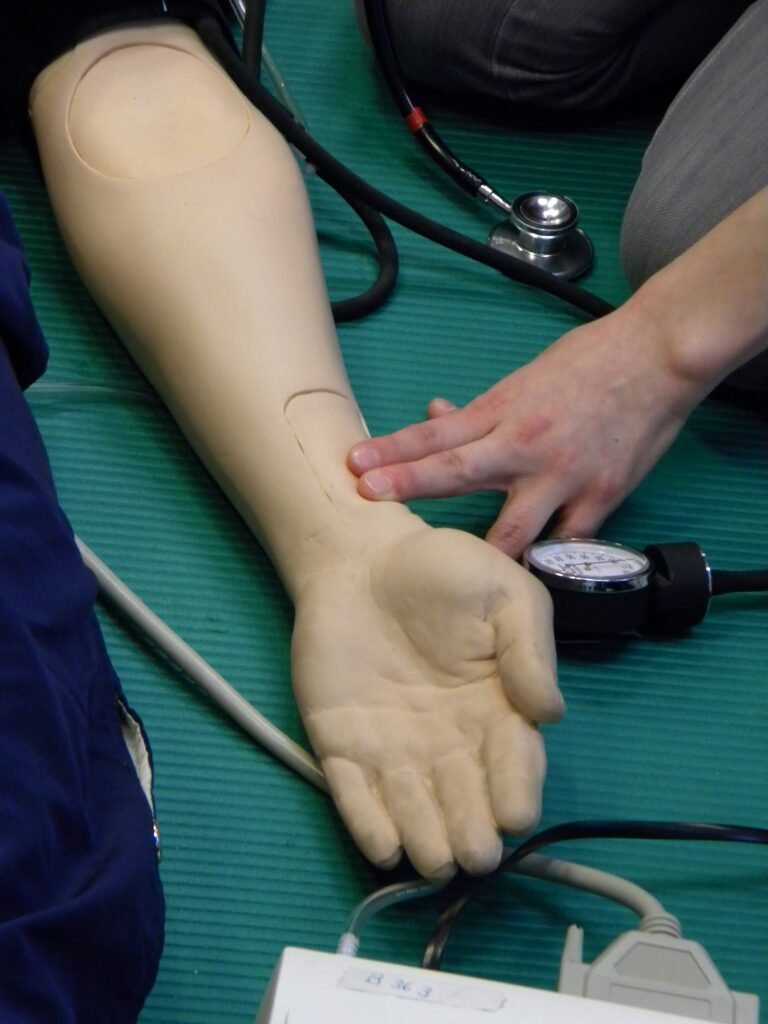
Place the index and middle fingers gently on the thumb side of the opposite wrist, where the radial artery runs near the surface. Adjust the position until you can feel the pulse. Do not press so hard that the pulse becomes difficult to detect, and avoid using your thumb because its own pulsation may interfere.
Count the pulses for a full minute. For a clearly regular pulse, a shorter interval multiplied to estimate a minute may be convenient, but a full-minute count reduces the effect of a small counting error and can help identify apparent irregularity. If the pulse seems irregular or you have symptoms, seek appropriate advice rather than relying on the count alone.
For example, a person counting 72 pulses over 60 seconds records approximately 72 beats per minute. If another person counts 36 over 30 seconds, the calculated estimate is also 72. The arithmetic does not guarantee that the underlying rhythm was regular throughout the measurement.
Our home blood pressure monitor guide describes why consistent preparation and measurement conditions matter. The same general approach is useful for pulse observations. Record the actual result, position and relevant conditions. Do not repeatedly measure until you obtain the number you were hoping to see.
Understand Wearable Heart Rate Readings
Many wrist-worn fitness devices estimate pulse using optical sensors. They detect changes in reflected light associated with blood volume changes near the skin. Some other devices use electrical signals or different sensor arrangements. The technology and processing methods vary, so the displayed result should be interpreted according to the device’s intended use.
Movement, fit, skin contact and other conditions can affect optical readings. A watch may display a sudden change that reflects an imperfect signal rather than an actual change in rate. Equally, a person may have symptoms even when the device shows an apparently ordinary number. Neither possibility should be dismissed.
Check how the manufacturer defines its resting heart rate metric. One device may derive a value from observations collected across relatively inactive periods, while another may use a different algorithm. Its daily summary is not necessarily equivalent to a manual pulse measured during one specific minute.
Our fitness tracker buying guide explains how intended use and measurement limitations should influence a purchase. Our smartwatch comparison discusses the differences between product categories. A more expensive device is not automatically necessary for a simple occasional pulse observation.
If a wearable gives an unexpected reading while you feel well, follow its instructions and consider checking manually after resting. If you have serious symptoms, obtain medical assistance rather than spending time troubleshooting the device. A consumer alert cannot establish a diagnosis or rule out an emergency. Share relevant records with a qualified clinician when monitoring or assessment is needed.
Recognize Factors That Influence Resting Heart Rate
Temperature, recent activity, emotional stress, illness, pain and hydration can influence heart rate. Some medicines can slow it, while others may affect it in different ways. The significance of a change depends on the person’s history, treatment and actual condition.
Fever can be associated with an increased heart rate, but the rate alone does not establish whether an infection is present. A person experiencing a substantial change together with worsening illness should seek appropriate medical assessment. Do not try to bring the number down through an unapproved medicine or by consuming excessive water.
Our dehydration guide describes why a rapid pulse may be relevant when fluid losses and other symptoms occur. The appropriate response depends on severity, the ability to drink safely and any medical restrictions. A pulse measurement cannot quantify the volume of fluid that needs replacement.
Training can also influence the usual rate over time. Someone who becomes more aerobically conditioned may notice changes in their resting observations, but a decrease is not the only meaningful sign of improved fitness. A sudden low rate accompanied by concerning symptoms is not evidence of successful training.
Tell a healthcare professional about medicines, supplements and recent changes when discussing a new pattern. Do not stop a prescribed heart or blood pressure medicine because you want to reach a different resting rate. The aim is to understand the change in context and follow individualized guidance, rather than attempting to control a measurement through unsupervised interventions.
Compare Heart Rate With Blood Pressure And Rhythm
Heart rate and blood pressure describe different aspects of circulation. Heart rate is a count of beats per minute. Blood pressure measures the pressure exerted within the arteries and is commonly expressed using systolic and diastolic values in millimeters of mercury. A person may have a typical heart rate with an abnormal blood pressure or a different combination.
A home blood pressure monitor may display a pulse estimate alongside its pressure measurements, but the measurements remain distinct. Follow the instructions for positioning, cuff fit and rest before using the device. Do not calculate blood pressure from heart rate or infer a safe heart rate solely from a blood pressure result.
Rhythm is another consideration. A pulse can have a particular average rate while the timing between beats is irregular. Two people with the same average count might therefore have different pulse patterns. A healthcare professional may use an electrocardiogram or another investigation to assess the heart’s electrical activity when indicated.
Our potassium nutrition guide discusses the role of electrolytes in normal physiological function. An irregular or unexpected pulse should not be treated by independently adding an electrolyte supplement. Medical assessment may be needed to identify the actual cause.
If you notice repeated irregularity, report the circumstances and associated symptoms to a clinician. A consumer device’s rhythm alert may provide useful information, but it is not a definitive diagnosis. The measurement method, actual symptoms and appropriate professional investigations determine the next step. Keep the distinction between rate, rhythm and blood pressure clear when sharing observations.
Track A Trend Without Overinterpreting Daily Changes
If a clinician recommends monitoring, follow their specified frequency, timing and action thresholds. Otherwise, an occasional consistent observation may be sufficient for general health awareness. More frequent checking does not necessarily produce more useful information and can make ordinary variation seem more significant than it is.
A straightforward record can include the date, time, pulse, position, relevant symptoms and unusual circumstances such as illness or recent activity. A fictional adult records morning rates of 68, 71 and 69 over three days while feeling well. These observations are relatively similar. A larger persistent change from their usual pattern may deserve a different response, especially when symptoms accompany it.
Avoid treating small fluctuations as proof that a workout succeeded or failed. Biological variation and counting differences can affect measurements. Our recovery guide explains why training decisions should consider workload, daily function and recovery together. One resting pulse value is not a complete recovery assessment.
Someone monitoring a known condition may have a more specific plan. Do not replace that plan with an average calculated from a wearable. If a clinician asks you to record observations at particular times, preserve those conditions and report unexpected results according to their instructions.
The useful objective of a log is to support a decision, not to create a need to achieve a particular number every morning. If measurement becomes distressing or repeatedly distracts from ordinary activities, discuss a more appropriate monitoring schedule with a healthcare professional. Seek timely help for actual symptoms regardless of what the log shows.
Recognize Warning Signs And Obtain Medical Advice
An unexplained persistent increase, decrease or irregularity in a resting pulse can warrant medical assessment. The urgency depends on how suddenly the change occurred, whether symptoms are present and the person’s medical history. Contact the appropriate healthcare professional if a new pattern persists or you are concerned about a medication-related change.
Emergency symptoms require a different response. If a person experiences chest pain, fainting, severe shortness of breath, collapse or other serious symptoms with an unusual pulse, obtain immediate emergency assistance. Do not wait to record several more measurements or try to determine whether the number meets a threshold on an online chart.
If someone is unresponsive and not breathing normally, call emergency services and follow dispatcher instructions for CPR and an AED. An untrained bystander should not delay CPR by repeatedly searching for a pulse. Our adult choking guide explains the importance of recognizing a transition to an unresponsive state and activating appropriate help. The causes may differ, but prompt emergency response remains essential.
When arranging medical assessment, provide the actual rate and timing, associated symptoms and relevant medicines. Explain whether the observation was made manually or by a device. A clinician may need to investigate rhythm, blood pressure or other factors depending on the circumstances.
The AHA fast heart rate resource and its corresponding slow heart rate guidance explain why different patterns need appropriate clinical interpretation. A normal previous reading does not guarantee that a new symptom is harmless. Focus on the person’s actual condition rather than the number alone.
Use Resting Heart Rate In A Broader Fitness Plan
Appropriate regular physical activity can support cardiovascular fitness and daily function. Our walking guide explains how to begin with manageable sessions, while our aerobic training guide describes how relative intensity can be interpreted. Resting heart rate may provide an additional observation, but it does not determine the entire program.
For a healthy beginner, a practical objective may be to repeat a comfortable walk more consistently or gradually increase its duration when recovery allows. A lower resting pulse is not a prerequisite for progressing. Similarly, a person should not attempt strenuous exercise solely to reduce the morning number.
If heart rate monitoring is part of a clinician-directed activity plan, follow the recommended ranges and symptom precautions. Medication or health conditions can make generic heart rate targets less appropriate. Alternative indicators such as perceived effort may be useful when professionally recommended.
Our strength training guide describes another component of a balanced activity pattern. Include suitable resistance training and recovery according to your needs rather than focusing exclusively on an aerobic measurement.
A useful heart rate routine is straightforward: understand the measurement, observe under comparable conditions when necessary, recognize relevant variation and seek assessment for concerning changes. Physical activity decisions should reflect capacity, symptoms, goals and medical instructions. The resting pulse is one piece of information within that broader picture. It should help you make informed decisions rather than become a number that you feel compelled to change.
Frequently Asked Questions
What is a typical adult resting heart rate?
For many calm, well adults, 60–100 beats per minute is typical.
Can a trained adult have a rate below 60?
Some healthy trained adults do. Symptoms and individual history determine whether assessment is needed.
How do I measure a wrist pulse?
Use the index and middle fingers on the thumb side of the wrist and count for a minute after resting.
Is heart rate the same as blood pressure?
They are separate measurements of circulation.
Can a smartwatch diagnose an abnormal rhythm?
Consumer readings and alerts have limitations. Appropriate clinical assessment is needed.
Should I stop a medicine that changes my pulse?
Do not stop prescribed medicines independently; contact your clinician.
When is an abnormal pulse an emergency?
Seek emergency assistance for serious symptoms such as chest pain, fainting, severe breathing difficulty or collapse.
- American Heart Association: All About Heart Rate
- American Heart Association: Bradycardia
- American Heart Association: Tachycardia
- American Heart Association: Target Heart Rates
Featured image: Pöllö, Measurement Of Radial Pulse, CC BY 3.0. Resized for display. Training demonstration.

General health education, not individualized diagnosis or treatment.
Discover more from The Secret
Subscribe to get the latest posts sent to your email.