
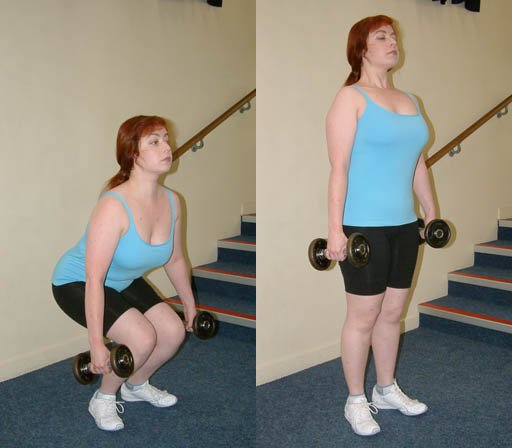
The hip hinge is a useful movement pattern for bending and lifting. It emphasizes motion at the hips while the knees remain comfortably bent and the trunk is controlled. Learning the pattern can help a beginner approach exercises such as the Romanian deadlift without immediately using heavy weights. This guide explains how to practise, adapt and progress the movement according to your abilities.
Begin with a comfortable stance and softly bent knees. Move your hips backward as your trunk inclines, keeping the load close and maintaining a controlled, comfortable spinal position. Return to standing by extending your hips. Start without added resistance, use a wall or dowel drill if helpful, and progress only when the movement is consistently comfortable.
| Variation | Main Use | Equipment |
|---|---|---|
| Wall Drill | Hip motion awareness | Suitable wall |
| Bodyweight Hinge | Movement control | Clear space |
| Dowel Drill | Optional trunk position feedback | Lightweight dowel |
| Romanian Deadlift | Progressive resistance training | Manageable weights |
Understand The Hip Hinge Movement
A hip hinge describes a movement in which the hips flex as the trunk inclines and extend as the body returns toward standing. The knees usually bend to some degree, but their contribution varies with the exercise. The pattern is often used when reaching toward an object, moving a load or completing a resistance training exercise.
The gluteal muscles and hamstrings contribute to hip extension, while muscles of the trunk help control the torso. Other muscles participate according to the stance, load and range. The hinge is not a movement in which the back must remain completely motionless, nor is it a technique that guarantees protection from injury. It is a practical way to organize a particular exercise.
Our beginner squat guide explains another lower-body movement. A squat generally involves greater simultaneous bending at the knees and hips, while a Romanian deadlift usually emphasizes the backward movement of the hips and a smaller change in knee angle. The patterns overlap, and different exercise variations can occupy positions between these descriptions.
A beginner does not need to classify every daily movement as either a squat or a hinge. The distinction is helpful when learning a specific training task. A person’s body proportions, available range and intended activity can influence the most suitable position. Start by learning how the movement feels without a challenging load, rather than judging success by how closely your posture resembles someone else’s photograph.
Set Up A Comfortable Starting Position
Choose a stable, uncluttered area with enough room to move backward and forward without contacting furniture. Wear suitable footwear or use another appropriate arrangement that provides predictable footing. If you need support for balance, select a stable support and seek individualized instruction where necessary.
Stand with your feet at a comfortable width. Many people begin around hip width, although there is no single correct stance for every body. Allow the knees to bend slightly rather than deliberately locking them. Keep your weight supported through your feet and avoid shifting so far backward that the toes lift unexpectedly.
Let the arms rest at your sides or place your hands near the front of the hips to help recognize the movement. A comfortable upright position is an adequate start; do not force the shoulders backward or exaggerate an arch in the lower back. Breathe normally and allow the trunk muscles to contribute to control.
Our warm-up guide describes why preparatory activity should reflect the intended exercise. A few comfortable repetitions without resistance can be a useful preparation before a loaded hinge. The objective is to check readiness and movement control, not to exhaust the muscles in advance.
If you experience unexplained back, hip or leg symptoms, obtain appropriate advice before beginning a demanding exercise. A person who has recently undergone surgery or has prescribed restrictions should follow those instructions rather than adopting a generic training position. A suitable setup is one that allows the movement to be performed safely and confidently.
Practise With A Wall Hip Hinge Drill
A wall drill gives the learner a simple external reference. Stand with your back facing a clear, solid wall and your heels a short distance away from it. Choose a distance that allows you to reach the wall with your hips without losing balance or forcing an excessive range.
From the starting position, bend the knees slightly and gently move the hips backward. Let the trunk incline as the hips move. Aim to touch the wall lightly with your hips rather than leaning against it or striking it. Return to a comfortable standing position by extending the hips.
The wall provides feedback about the direction of movement. If the knees travel forward and the body lowers without the hips reaching toward the wall, you may be performing a more squat-like movement. That is not inherently wrong, but it may differ from the pattern being practised. Experiment with a small adjustment and a shorter range rather than forcing the position.
A fictional learner begins with three or four slow repetitions and rests. They notice that standing too far from the wall causes them to reach backward awkwardly, so they move closer. The modified drill allows them to maintain steadier footing. The useful change is the improved control, not a greater distance from the wall.
The ACE hip hinge exercise resource offers additional instruction. Practise only in a range that is comfortable and appropriate. There is no need to turn a coordination drill into a high-repetition endurance challenge. Once you can recognize and repeat the movement, another variation may provide a more relevant strength stimulus.
Use A Dowel As Optional Feedback
Some people find a lightweight dowel useful for learning trunk and hip coordination. A typical drill places a suitable straight object along the back, with contact near the head, upper back and sacrum. The aim is to notice whether the trunk position changes substantially during the movement, not to force the spine into a perfectly straight line.
If the drill suits your shoulder mobility and balance, hold the dowel gently and perform a small hinge. Maintain comfortable contact as the hips move backward. Return to standing without suddenly changing posture. If the object is uncomfortable to hold or restricts your movement, choose the wall drill or another suitable method instead.
The three-contact method is a teaching tool, not an anatomical requirement. The spine has natural curves, and individuals differ in their proportions and mobility. A person should not deliberately flatten all those curves or force the head backward merely to maintain contact with the dowel.
The University of Florida Extension hip hinge guidance describes the movement as a functional pattern. Feedback tools can support learning when they help the person understand that pattern.
Our stretching guide explains why a person’s available movement range may differ across activities. The goal is to develop control within a useful range, not to force additional flexibility before every exercise. Do not perform the drill through sharp pain, dizziness or loss of balance. A qualified trainer or rehabilitation professional can help select another approach when needed.
Recognize The Difference Between Hinge Variations
A bodyweight hinge can be useful for practising movement without having to control an external load. A Romanian deadlift typically begins from standing and uses a backward hip movement to lower a load through a chosen range. A conventional deadlift generally begins with the load at a lower position and may involve more knee movement, depending on the setup and individual technique.
These exercises are related but not identical. The starting height, range, equipment and load can affect their demands. A beginner who has learned a bodyweight hinge does not automatically need to perform a conventional deadlift from the floor. A raised starting position or a different resistance exercise may be more appropriate.
Our dumbbell equipment guide discusses practical differences between fixed and adjustable weights. When selecting an implement for a hinge exercise, check that it can be handled securely and that any adjustment mechanism is properly engaged. A large adjustable dumbbell may change the available space near the legs.
A kettlebell, dumbbell or other suitable implement can provide resistance, but the label on the equipment does not determine whether the exercise is appropriate. Use an amount you can control and a starting position from which you can safely pick up and put down the weight.
A simple comparison of variations should therefore consider the actual exercise goal. Practising hip movement may require little or no added resistance. Developing strength may involve gradually increasing an appropriate load. Learning a specific competitive lift may require specialized coaching. The most demanding variation is not automatically the best choice for a general beginner.
Introduce A Light Dumbbell Romanian Deadlift
After learning a comfortable unloaded hinge, an otherwise healthy adult may choose to practise with a light, manageable dumbbell or pair of dumbbells. Select equipment that can be held securely without affecting balance. Obtain instruction if you are unfamiliar with lifting and handling resistance equipment.
Begin standing with the weights in front of or beside the thighs, according to the chosen variation. Soften the knees and move the hips backward. Allow the weights to travel close to the body as the torso inclines. Stop at the point where you can maintain control and the available range remains comfortable. There is no requirement for the weights to reach the floor.
Return to standing smoothly by extending the hips. Avoid leaning backward excessively at the finish. Keep breathing and do not rush between repetitions. The appropriate movement range depends on the person’s anatomy, capacity and intended exercise.
Our grip strength guide explains why the ability to hold an object is a separate consideration from the ability to move the hips. If the hands become too fatigued to control the weights, end the set or select a more manageable load. Grip fatigue should not be ignored simply because the legs still feel capable.
A fictional beginner performs a short set with light weights and notices that the second half of the set becomes less controlled. They reduce the repetition count in the next set rather than trying to complete a target at any cost. This is an example of using feedback to adjust workload. Safe handling and controlled repetitions remain more important than the number displayed on the dumbbells.
Address Common Technique Problems
One common difficulty is moving the knees forward and lowering the hips in a way that changes a hinge into a squat-like exercise. That movement may still be appropriate for another goal. If the intended exercise is a Romanian deadlift, however, practise the backward hip motion with a smaller range and less load.
Another difficulty is allowing the resistance to move farther from the body than intended. This can change the mechanical demands and make a given load harder to control. Reduce the resistance and practise a close, predictable path when that suits the variation. Avoid attempting to correct technique while holding an excessively demanding weight.
Some people try to keep the knees completely straight because they associate the exercise with stretching the hamstrings. Softening the knees may help produce a comfortable range and reduce unnecessary strain. A feeling of stretch is not proof that the movement is correct, and pain is not a useful requirement.
Our muscle soreness guide describes how unfamiliar exercise can produce delayed discomfort. Significant sharp pain, numbness, instability or worsening symptoms should not be treated as ordinary soreness. Stop the exercise and seek appropriate advice where indicated.
Recording a set from a safe position may help a person identify broad changes in movement, but a recording is not a medical assessment. It does not reveal the internal forces on every tissue or establish whether a particular position is safe for someone with a medical condition. A coach can provide more specific feedback when technique remains difficult. Make one adjustment at a time so you can recognize whether it improves control.
Plan Repetitions And Resistance Progression
A beginner’s first objective is to establish a repeatable movement. An illustrative introductory session for an otherwise healthy adult might include a few unloaded practice repetitions followed by one or two sets of five to eight comfortable repetitions. This example is not a universal prescription, and a person may need fewer repetitions, a different movement or professional guidance.
Our strength training guide discusses how a wider program can address different muscle groups and movement patterns. A hinge can be combined with appropriate pressing, pulling and other lower-body exercises. The total workload matters more than treating the hinge as a separate challenge that must be performed every day.
Our progression guide explains why gradual changes can support adaptation. Repetitions, range, resistance and set number are all potential variables. If a person can repeat the current exercise with good control and adequate recovery, a modest increase in one variable may be appropriate. Maintaining the same workload is also reasonable when it meets the goal.
Avoid increasing weight because of an arbitrary deadline. Consider whether the equipment can be handled, whether the chosen range remains appropriate and how the exercise fits with other activities. A session involving substantial stair climbing or demanding work can influence the amount of additional lower-body training that is suitable.
Allow recovery between challenging sessions. Persistent soreness that interferes with ordinary activities or a worsening loss of function may indicate that the workload needs adjustment. A training plan should remain flexible instead of requiring progression every time the exercise is performed.
Transfer The Skill To Everyday Movement
The hip hinge may help a person understand one way of organizing a bending or lifting task. Everyday activities differ in object shape, weight, height, available space and time pressure. A technique practised with a light dumbbell does not automatically establish that a heavy household object can be moved safely.
Before lifting, consider whether the item should be moved at all, whether assistance or equipment is needed and whether the route is clear. Keep the task manageable, avoid sudden unexpected changes in load and do not lift a heavy or unstable object simply to demonstrate a newly learned movement.
Our first aid guide discusses responding appropriately when an injury occurs. Prevention also involves checking the actual environment and equipment, not relying exclusively on one exercise technique. Workplace lifting should follow applicable training and safety procedures.
Use a simple practice record: variation, range, resistance, repetitions, approximate effort and any relevant symptoms. If the movement becomes more controlled over time, that improvement may be valuable even without a large increase in load. Someone who finds an alternative strength exercise more suitable can choose that instead.
Stop for concerning symptoms during exercise, and obtain urgent care for chest pain, fainting, severe breathing difficulties or other emergencies. Persistent pain or functional limitation warrants individualized assessment. A hip hinge is one useful training pattern, not a treatment for every back problem or a test that everyone must pass. The objective is a comfortable, purposeful movement that supports your broader activities and strength goals.
Frequently Asked Questions
Is a hip hinge the same as a squat?
They overlap, but a hinge generally emphasizes hip motion while a squat uses substantial hip and knee movement.
Do I need weights to learn the hinge?
Unloaded practice and a suitable wall drill can be useful starting points.
Should my knees remain straight?
A comfortable slight bend is often useful; do not force the knees into a locked position.
Must the weights touch the floor?
Choose a manageable range appropriate to the exercise and your abilities.
What if I feel back pain?
Stop painful movements and seek appropriate advice for persistent or concerning symptoms.
How should I increase resistance?
Make modest adjustments when the current movement is controlled and recovery is adequate.
Does the hinge prevent every lifting injury?
No single movement technique guarantees injury prevention. The task, load and environment also matter.
- ACE: Hip Hinge Exercise
- UF/IFAS Extension: Functional Movement Series, The Hip Hinge
- NHS: Strength Exercises
Featured image: GeorgeStepanek, Dumbbell Deadlift, CC BY-SA 3.0. Resized as necessary under the same license. Illustrative related exercise, not a complete technique demonstration.

General exercise education, not individualized rehabilitation advice.
Discover more from The Secret
Subscribe to get the latest posts sent to your email.