
A jump rope is compact exercise equipment, but choosing the right rope involves more than selecting a length or color. The material, weight, handle design and intended surface can affect control and durability. Skipping also involves repeated landings and coordination, which means that a suitable beginner routine must reflect individual fitness, mobility and health. This guide explains how to select a rope and use it appropriately.
For many beginners, an adjustable general-purpose PVC or beaded rope with comfortable handles is a practical choice. Follow the manufacturer’s sizing instructions, test it in a clear area and adjust gradually. Start with short, comfortable practice intervals and adequate recovery. Jumping is not suitable for everyone; choose a lower-impact alternative or seek individualized guidance if health or mobility concerns affect participation.
| Rope Type | Potential Use | Consideration |
|---|---|---|
| PVC | General beginner practice | Adjustability and cord feel |
| Beaded | Timing and coordination | Feedback, noise and weight |
| Speed cable | Specific fast-turning skills | Less forgiving for some learners |
| Weighted | Specific resistance or conditioning goals | Increased fatigue and handling demands |
Decide What You Want From The Rope
Jump rope exercise combines repeated turning of a rope with timed movement of the feet. It can involve coordination, cardiovascular effort and repeated loading of the lower limbs. The demands depend on the pace, movement pattern, rope and person. A rope suitable for learning a basic rhythm may be different from equipment intended for advanced speed skills.
For general fitness, identify whether the goal is a brief aerobic activity, coordination practice or a portable exercise option. You do not need specialized equipment for competitive double-unders if your main aim is learning a controlled basic skip. Conversely, someone with a specific sport-related goal may eventually require a different rope or coaching.
Our exercise intensity guide discusses why relative effort matters. Jumping rope can become demanding rapidly for a beginner, even when the session is brief. A fixed number of jumps does not represent the same workload for everyone.
The activity also involves impact and balance requirements. A person with an injury, significant joint symptoms, impaired balance or a medical exercise restriction may need a different activity or professional guidance. Our walking guide and cycling guide provide alternatives that may suit different circumstances.
A purchase is worthwhile only if the activity and environment are appropriate. Start with the actual purpose, available space and health considerations rather than assuming that inexpensive equipment is necessarily suitable for every adult. A beginner’s rope should support learning and safe participation before it supports speed or complex movement patterns.
Compare PVC, Beaded, Cable And Leather Ropes
General-purpose ropes are made from several materials. A PVC rope is often flexible, relatively affordable and available in adjustable designs. Its thickness and weight vary between products. Some beginners find a moderately weighted cord easier to feel during rotation than an extremely thin speed cable.
Beaded ropes commonly use a cord fitted with a series of plastic beads. The beads contribute weight and can provide noticeable feedback as the rope turns. That feedback may help some learners recognize timing. However, the actual handling characteristics and durability depend on the particular product.
Speed ropes often use a thin coated cable and handles designed for rapid rotation. They can suit specific advanced training goals, but the light cable and quick turning action may be less forgiving for a beginner. Abrasive outdoor surfaces can also damage some cable coatings.
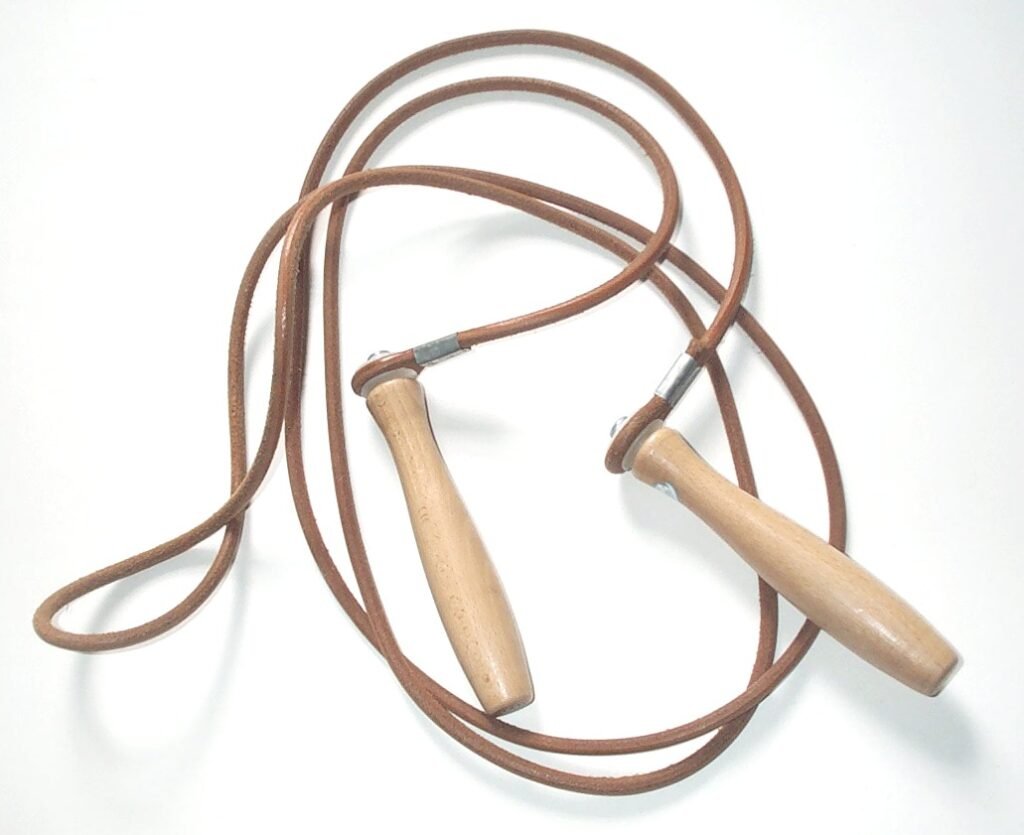
Leather ropes and other traditional designs have different handling and maintenance characteristics. A rope’s material alone does not determine its suitability. Consider how it rotates, whether it can be adjusted and which surfaces the manufacturer recommends.
Our fitness equipment comparison illustrates the importance of matching equipment characteristics to a specific purpose. A simple, moderately weighted general-purpose rope can be more useful for learning than a specialized product with features you do not need.
Inspect any rope before use. Damaged coatings, sharp cable ends, loose handles or frayed material can create unnecessary hazards. Follow the manufacturer’s maintenance and replacement guidance. The best material is the one that supports your intended activity, environment and ability to control the equipment.
Understand Weighted Ropes And Handle Design
Some products contain additional weight in the rope itself, while others place weight primarily in the handles. These arrangements create different demands. A weighted cord can change the momentum and feedback during rotation, whereas weighted handles can increase the load the hands and arms must control.
A heavier product is not automatically better for cardiovascular training or muscle development. It can also increase fatigue and make the rope harder to manage. A beginner learning timing may find a manageable general-purpose rope more useful than starting with a heavily weighted option.
Handle length, grip texture and rotation mechanism can affect comfort. A person should be able to hold each handle securely without excessive squeezing. Consider whether the handles are comfortable for your hand size and whether the cord rotates predictably. Smooth bearings may be valuable in some designs, but they are not essential for every recreational use.
Our grip strength guide discusses why secure equipment handling and the ability to control a load are separate considerations. A rope that becomes difficult to hold as you fatigue may not suit the intended session. End the practice interval before control deteriorates rather than trying to complete more turns.
Avoid buying a weighted rope solely because a manufacturer claims that it burns a specific number of additional calories. Energy expenditure varies with effort, duration and individual characteristics, and such marketing figures may not describe your actual experience. Select weight and handles according to control, comfort and the manufacturer’s instructions. If you later have a reason to change the equipment, do so gradually rather than simultaneously increasing rope weight, speed and practice duration.
Choose And Adjust A Suitable Rope Length
Many adjustable jump ropes use a sizing method based on standing on the middle of the cord and observing where the handles reach. The recommended handle position can vary by product design, intended technique and learner preference. Follow the instructions for the particular rope rather than treating a single height formula as universal.
As a broad starting point, many general-purpose sizing guides recommend a cord approximately three feet longer than the user’s height. Some designs use different methods, and the total length may or may not include handles. Check the manufacturer’s definition before purchasing. A rope that is too short may catch frequently, while excessive length can affect timing or contact the surface farther from the body than intended.
Choose an adjustable option when you are uncertain about the appropriate length. Test the rope in a clear area and make small adjustments according to control. Avoid permanently cutting the cord until you have confirmed the length suits the intended user and movement. Secure any adjustable fastener as directed before practising.
For a fictional example, a beginner tries a rope at its initial setting and finds that it contacts the floor heavily far in front of the feet. They check the instructions, shorten it modestly and test it again at a slow pace. If another person has difficulty, the correct adjustment may be different.
Our movement guide describes how body proportions and technique can influence exercise setup. Jump rope sizing similarly depends on the actual person, cord design and movement. A suitable length allows predictable turns without requiring exaggerated arm positions or repeated uncontrolled attempts to clear the rope.
Check The Surface, Footwear And Available Space
Skipping requires clear space around and above the person. Make sure the rope cannot strike nearby people, furniture, ceiling fans, fixtures or other objects. Consider both the full rotation of the cord and the area where you might step if timing is lost. A space that accommodates ordinary standing exercise may still be too small for a rotating rope.
Choose a level, stable surface with appropriate traction and follow the rope manufacturer’s surface guidance. Very hard or abrasive surfaces may affect comfort and equipment wear. Unstable surfaces, thick soft mats and uneven ground can interfere with predictable landings and increase trip risk. If a purpose-designed mat is used, it should remain stable and suit both the rope and the movement.
Suitable footwear should support comfortable, secure movement in the actual setting. Do not assume that a particular shoe category guarantees protection from every injury. Check fit, traction and condition, and consider individual needs.
Our beginner strength training guide emphasizes establishing a safe exercise environment. That principle is particularly important when using equipment that moves outside the immediate space occupied by the body.
Inspect the cord, handles and adjustment points before each session. Check whether the rope has become tangled or damaged during storage. Keep unused equipment out of walkways and away from people or animals who could become caught in it.
If no appropriate space is available, choose another exercise rather than attempting to use the rope around obstacles. A person can practise some aspects of rhythm without the rope, but even unloaded jumping should occur only when the movement and surface are appropriate. Safe surroundings are part of equipment selection, not a detail to address after purchasing.
Learn Basic Timing Before Increasing Speed
For an otherwise healthy adult who can safely perform repeated small jumps, start with a comfortable upright position, secure footing and the rope behind the body. Hold the handles with the arms in a manageable position. Use a controlled turning movement, often led substantially by the wrists, to bring the rope around. Begin with single turns rather than trying to maintain a rapid continuous sequence immediately.
When the rope approaches the feet, use a small controlled jump sufficient to clear it. Land comfortably and regain control before the next attempt. Do not attempt excessive jump height simply to avoid every mistake. The necessary range and timing depend on the rope and the person.
A learner can also practise turning the rope without jumping, or practise the movement without holding a rope if that is appropriate. Separating tasks can make coordination easier to understand. A qualified instructor may provide more individualized guidance if the basic movement is difficult.
Our squat guide explains the importance of controlled lower-body movement. Repeated landings involve different demands from a squat, but both activities benefit from selecting a manageable workload. Do not continue when landing control deteriorates.
A fictional learner completes three successful single turns, then pauses to reset. The next attempt is equally slow. Over time, they learn to link several turns without needing to increase jump height. This is meaningful coordination progress even before the session becomes a sustained aerobic workout.
Avoid treating mistakes as a reason to accelerate. Slow the movement, check rope length and positioning, and rest when needed. Basic rhythm and safe control are more useful first objectives than a high jump count.
Build A Beginner Practice Schedule Gradually
A first session can be brief. For an otherwise healthy adult who has suitable equipment and can safely jump, an illustrative practice period might involve ten to twenty seconds of controlled attempts followed by enough rest to recover. Repeat only as appropriate. A person may need shorter intervals or a different activity, and these examples are not a prescribed training dose.
During the first several sessions, focus on learning the timing and observing how the legs respond. Repeated jumping can be demanding for muscles, tendons and joints, particularly when unfamiliar. Avoid increasing both the duration and the number of sessions sharply before evaluating recovery.
Our progressive overload guide explains why changing one major variable at a time can support more controlled training. In skipping, potential variables include work interval duration, number of intervals, speed and movement complexity. An increase is useful only when the current workload is manageable.
Our rest-day guide discusses how recovery fits into a broader activity pattern. A person may choose nonconsecutive practice days or replace one demanding session with a more comfortable activity when appropriate. There is no requirement to skip every day.
The CDC’s adult activity guidelines provide a general framework for aerobic and muscle-strengthening activity, but a beginner should not attempt to meet the entire weekly aerobic target through an unfamiliar jumping exercise immediately. Skipping can be only one component of the routine.
Keep a simple record of practice time, comfort, effort and control. Progress may involve longer comfortable intervals, fewer interruptions or better coordination. It is reasonable to maintain an enjoyable workload when it meets your purpose. A useful routine develops from manageable participation, not a mandatory challenge.
Recognize Impact, Fatigue And Medical Considerations
Jumping rope can create repeated mechanical loading through the lower body. The amount depends on jump height, technique, surface, pace and the person. It is not a universally low-impact exercise. A beginner should consider their recent activity history and whether the movement is suitable.
Stop the session if you develop sharp pain, instability, unusual numbness or other concerning symptoms. Persistent or worsening joint, tendon or muscle symptoms warrant appropriate assessment. Our exercise soreness guide explains why unfamiliar training can create delayed soreness, while more concerning symptoms require a different response. Do not assume all discomfort is a normal adaptation.
Chest pain, fainting or severe breathing difficulty during activity requires emergency assistance. Our fainting guide explains why a collapse during exercise needs emergency assessment even if the person appears to recover. A fitness device or a previously comfortable workout does not exclude a medical problem.
People with conditions affecting balance, joint function, cardiovascular health or recovery may need individualized guidance. Someone with a prescribed exercise restriction should not replace it with a generic skipping routine. Appropriate alternatives can include level walking, stationary cycling or another professionally recommended activity.
Consider environmental conditions and appropriate fluid access. Our dehydration guide discusses warning signs and heat-related concerns. Avoid continuing an intense session in unsuitable conditions simply to finish a planned interval.
The objective is safe and suitable participation. A rope is an optional tool, not a necessary requirement for fitness. If the movement is not appropriate, choosing another activity can be a better decision than repeatedly attempting to overcome pain, poor balance or inadequate space.
Make A Final Equipment Decision
Compare the options according to material, adjustability, handle comfort, condition, manufacturer instructions and suitability for your available surface. A moderately weighted general-purpose rope may provide a useful balance of feedback and control for a learner. A thin speed cable or heavily weighted design may serve a more specific purpose, but neither is essential for introductory practice.
Check whether replacement cords, handles or other parts are available when relevant. Consider storage and whether the rope can be transported without becoming tangled or damaged. A simple product with clear sizing instructions may offer better value than a more complex design that is difficult to adjust.
Our fitness tracker guide describes the importance of selecting technology for a defined need. A counter-equipped rope or connected application may offer convenient records, but counting accuracy can vary and the additional feature may not be necessary. You can track a manageable practice interval with an ordinary timer.
Before completing a purchase, confirm that you have a suitable practice space, appropriate footwear and a realistic plan for learning. If you are uncertain about the activity’s medical suitability, obtain advice first. If you are uncertain about technique, consider practical instruction.
The most valuable equipment is equipment you can use comfortably, safely and consistently for an appropriate purpose. Choose a rope that supports your current needs, then assess whether it remains suitable as your skills develop. Progress through control and appropriate recovery rather than buying increasingly demanding equipment in the expectation that the product itself will produce fitness improvements.
Frequently Asked Questions
Which rope is suitable for a beginner?
An adjustable general-purpose PVC or beaded rope with manageable weight can be a practical starting option.
How long should my jump rope be?
Follow the manufacturer’s sizing method and adjust in small increments to suit your control and technique.
Is a weighted rope better for everyone?
Weighted designs create different demands and may not suit beginners or every training goal.
Can I skip on any surface?
Use a clear, stable and appropriate surface that suits the equipment and movement.
How long should my first session be?
Start with brief manageable practice and adequate rest; individual abilities determine suitable duration.
Do I need to skip daily?
Daily jumping is not mandatory. Allow recovery and adapt the schedule to your broader activities.
Is skipping low impact?
It involves repeated landings and may be unsuitable for some people. Choose an appropriate alternative if necessary.
- CDC: Measuring Physical Activity Intensity
- CDC: Adult Physical Activity Guidelines
- American Council On Exercise: A Trainer’s Must-Have Equipment List
- American Council On Exercise: Lower-Body Circuit Workout
Featured image: Simon Speed, Leather Skipping Rope, public domain worldwide as declared by the creator. Resized for display.

General equipment and exercise education; follow medical guidance and manufacturer instructions.
Discover more from The Secret
Subscribe to get the latest posts sent to your email.